
Khăn & Phòng Tắm
Top 5 xưởng sản xuất khăn bông giá rẻ, chất lượng nhất Hà Nội
Những chiếc khăn có giá quá cao khiến không ít người e ngại, nhất là những ai đang kinh doanh lĩnh vực khách sạn, spa, resort,… Nếu biết cách chọn lựa kỹ càng các loại khăn bông, từ chất liệu đến mẫu mã và nhất là xưởng sản xuất khăn bông chất lượng, giá rẻ thì bạn hoàn toàn có khả năng tăng điểm cộng cộng lớn đối với khách hàng của mình mà không mất quá nhiều chi phí đầu tư. Nếu chưa biết những điều này, hãy đồng hành cùng Jolie’Fam để tìm câu trả lời.

I. Các loại khăn bông
Khăn bông nói chung đều có nguồn gốc từ sợi tự nhiên nên rất an toàn và lành tính khi sử dụng và thân thiện với môi trường. Chất liệu làm khăn bông được các xưởng sản xuất khăn bông sử dụng cũng khá đa dạng như sợi cotton, sợi tre, gỗ sồi, sợi tơ sen, sợi sữa đậu nành,… Mỗi loại đều có công dụng và đặc trưng riêng nhưng thông dụng nhất là những loại khăn được làm từ 100% cotton.
1. Khăn gỗ Sồi
Khăn gỗ sồi làm từ sợi modal (gỗ sồi), là loại sợi được sản xuất từ 50% sợi cellulose có trong gỗ sồi và 50% bông cotton. Khăn modal rất mềm mịn, thoáng khí, mang đến cảm giác mát lạnh và thấm hút tốt. Sợi modal dễ nhuộm màu nên màu sắc khăn gỗ sồi rất đa dạng. Ngoài ra, lợi thế lớn của sợi modal là khả năng chống co rút, khăn dù qua nhiều lần giặt tẩy vẫn giữ được độ co giãn lâu dài, không mất phom và êm ái. Khăn gỗ sồi thích hợp sử dụng cho cả làn da nhạy cảm, trẻ con hay trẻ sơ sinh đều hoàn toàn yên tâm khi sử dụng.

2. Khăn sợi cotton
Sợi cotton là nguyên liệu làm khăn bông phổ biến nhất hiện nay và được phần lớn các khách sạn cao cấp lựa chọn sử dụng khi đặt may khăn. Khăn cotton được làm từ sợi bông tự nhiên được ưa chuộng bởi sự mềm mịn, thấm hút nhanh chóng, kháng khuẩn và không gây kích ứng da. Khăn sợi cotton có nhiều loại với độ mềm mịn khác nhau tùy vào tỉ lệ bông có trong sợi vải, tỉ lệ sợi bông cao thì độ mềm, mịn cao. Khăn bông pha có độ dai, bền hơn nhưng chúng không thân thiện với môi trường và độ mềm mịn thấp hơn so với khăn bông 100% cotton.
3. Khăn sợi tre
Khăn sợi tre được làm từ nguyên liệu chính là sợi bamboo (sợi tre). Khăn loại này nổi bật với đặc tính kháng khuẩn gấp 3 lần sản phẩm thông thường, chống ẩm mốc và khử mùi cực tốt. Chúng rất lành tính và thân thiện với môi trường, độ bền cũng cao, giặt nhiều lần mà không bị xơ cứng. Khăn sợi tre là lựa chọn lý tưởng cho mùa hè và rất thích hợp cho làn da trẻ sơ sinh, hoàn toàn không gây kích ứng da, kể cả da nhạy cảm nhất.

4. Khăn sợi nở
Khăn sợi nở chính là một dạng của khăn sợi cotton được sản xuất theo kỹ thuật hiện đại dạng không vòng xoắn, giúp sợi có độ nở tốt nhất. Khăn có đặc tính nổi bật là thấm hút nước tốt nhất nhưng chúng có giá thành rất cao do quy trình sản xuất loại sợi nở rất phức tạp. Ngoài ra, chúng được làm từ sợi cotton nên có những ưu điểm của khăn bông như sự mềm mại, kháng khuẩn và không gây kích ứng da.

How Casinosforusdt Explains USDT’s Growing Role in Canadian Online Gambling
The Canadian online gambling market has undergone a significant structural shift over the past several years, driven in large part by changes in provincial regulation and the parallel rise of cryptocurrency as a viable payment method. Tether (USDT), the most widely circulated stablecoin by trading volume, has moved from a niche instrument used primarily by crypto traders into a functional payment tool for thousands of Canadian players engaging with offshore and domestically licensed online casinos. Understanding why this transition is happening requires looking at both the regulatory environment that governs Canadian gambling and the specific financial properties that make USDT attractive compared to traditional fiat methods like credit cards, Interac, or bank transfers. The intersection of these two forces — regulatory complexity and financial utility — is precisely the space that resources like Casinosforusdt have begun to document and analyze for Canadian audiences.
The Regulatory Landscape That Created Space for USDT
Canada’s gambling regulation is not governed by a single federal framework. Instead, each province holds authority over gambling within its borders, a structure that has produced a patchwork of rules with significant gaps. The Criminal Code of Canada, specifically Sections 201 through 207, establishes the federal baseline: provinces may operate and license gambling, but the code does not explicitly address offshore operators or the use of cryptocurrency for wagering. This ambiguity has been the defining feature of the Canadian online gambling environment for the better part of two decades.
Ontario changed this picture substantially when it launched its regulated iGaming market on April 4, 2022, through iGaming Ontario, a subsidiary of the Alcohol and Gaming Commission of Ontario (AGCO). This made Ontario the first Canadian province to open a competitive, commercially regulated online gambling market where private operators could obtain licenses. By mid-2023, the Ontario market had surpassed $1.5 billion in gross gaming revenue, with over 50 licensed operators active in the province. The AGCO’s regulatory standards require operators to meet specific standards around responsible gambling, advertising, and financial transaction integrity — but cryptocurrency acceptance remains a gray area even within this framework. Most Ontario-licensed operators currently process transactions in Canadian dollars, leaving USDT largely to offshore platforms that accept Canadian players without provincial licensing.
Outside Ontario, provinces like British Columbia, Quebec, and Alberta operate government-run online gambling platforms (PlayNow, Espacejeux, and others), which do not accept cryptocurrency. This means that Canadian players in these provinces who want to gamble online with USDT must turn to offshore operators, a practice that is widespread but exists in a legal gray zone. The RCMP and provincial regulators have not historically pursued individual players for using offshore sites, and no Canadian has been prosecuted for doing so, but the regulatory uncertainty does create friction — friction that USDT, paradoxically, helps some players navigate by offering faster and more private transaction processing than traditional banking methods.
The 2023 update to Canada’s Proceeds of Crime (Money Laundering) and Terrorist Financing Act extended certain reporting obligations to cryptocurrency exchanges operating in Canada, requiring them to register with FINTRAC and comply with know-your-customer (KYC) protocols. This has had a filtering effect: Canadian crypto exchanges now operate under clearer rules, while offshore gambling platforms accepting USDT remain outside this domestic regulatory perimeter. The result is a two-tier system where USDT flows into gambling through channels that are technically outside Canadian regulatory oversight but not explicitly illegal for individual participants.
Why USDT Specifically Has Gained Traction Over Other Cryptocurrencies
Bitcoin and Ethereum were the first cryptocurrencies to appear on online gambling platforms, and they remain widely accepted. However, their volatility has always been a fundamental problem for gambling use cases. A player who deposits 0.05 BTC worth $3,000 CAD today might find that their balance is worth $2,400 or $3,600 by the time they complete a session, depending on market movements. This introduces an element of financial risk that is entirely separate from the gambling itself, which most players find undesirable. USDT eliminates this variable entirely. As a stablecoin pegged to the US dollar, USDT maintains a consistent value, meaning a deposit of 1,000 USDT is worth approximately 1,000 USD regardless of when the transaction is processed or withdrawn.
Tether’s USDT operates across multiple blockchain networks, which has practical significance for gambling transactions. On the Tron (TRC-20) network, USDT transactions are confirmed in seconds and carry fees that are often less than $1 USD per transaction. On Ethereum (ERC-20), fees are higher and variable, but the network’s deep liquidity makes it widely supported. Many offshore casinos accepting Canadian players now offer both options, allowing users to choose the network that best suits their transaction size and urgency. This technical flexibility is something that traditional payment processors cannot replicate — Interac e-Transfer, for example, typically takes 30 minutes to several hours to process, and credit card deposits to gambling sites are frequently declined by Canadian banks, which have adopted internal policies discouraging gambling transactions even where they are not legally prohibited.
Data from Chainalysis’s 2023 Geography of Cryptocurrency Report indicated that stablecoins accounted for approximately 70% of all cryptocurrency transaction value globally, with USDT representing the dominant share. In regions with currency instability or limited banking access, stablecoin adoption has been even more pronounced. Canada does not face currency instability, but the banking friction around gambling payments has created a functional parallel: Canadian players who cannot reliably process gambling deposits through conventional methods have found USDT to be a consistent alternative. Resources tracking this trend, including https://casinosforusdt.com, where the intersection of USDT and online casino platforms is documented with a focus on Canadian market conditions, reflect a growing demand for structured information about how to use stablecoins for gambling purposes within the Canadian context.
There is also a tax reporting dimension worth understanding. The Canada Revenue Agency (CRA) treats cryptocurrency as a commodity, not a currency, for tax purposes. This means that every USDT transaction technically constitutes a disposition of property, and any gain or loss in value between acquisition and use must be reported. However, because USDT is pegged to the USD and its value against the CAD fluctuates only modestly, the tax complexity is significantly lower than it would be with Bitcoin. A player converting CAD to USDT and then using that USDT for gambling may experience minor foreign exchange fluctuations, but these are generally small enough that many players do not treat them as material tax events — though the CRA’s formal position requires reporting regardless of size. This relative tax simplicity compared to volatile cryptocurrencies is another factor driving USDT adoption among Canadian gamblers who are at least partially aware of their reporting obligations.
How Platforms and Players Are Adapting to USDT-Centric Gambling
The operational model of offshore casinos accepting Canadian USDT players has become increasingly sophisticated. In 2020 and 2021, many crypto-accepting casinos operated with minimal KYC requirements, allowing players to deposit and withdraw with only a wallet address. Regulatory pressure from FATF (the Financial Action Task Force), which updated its guidance on virtual assets in 2021, prompted many offshore operators to implement tiered KYC systems: lower verification requirements for smaller balances, stricter documentation for larger withdrawals. This has changed the user experience for Canadian players, who now frequently encounter identity verification requirements on platforms that previously operated with greater anonymity.
The emergence of dedicated USDT casino platforms — operators that conduct all transactions exclusively in USDT or a small set of stablecoins — represents a notable structural development. These platforms price their games in USDT rather than converting to fiat for display purposes, which eliminates the conversion step and provides players with a cleaner accounting of their activity. Provably fair games, which use blockchain-based random number generation that players can independently verify, have become more common on these platforms, addressing one of the longstanding criticisms of offshore gambling: the inability to verify game fairness without trusting the operator’s internal systems.
Canadian players engaging with USDT gambling platforms have also become more sophisticated in how they manage their crypto holdings. Rather than converting CAD directly to USDT on a Canadian exchange each time they want to deposit, many maintain a USDT balance on a non-custodial wallet, replenishing it periodically. This approach reduces the number of taxable transactions (each CAD-to-USDT conversion is technically a taxable event) and simplifies the flow of funds. Hardware wallets and mobile non-custodial wallets have seen increased adoption among this demographic, with platforms like Ledger and Trust Wallet reporting growth in Canadian user bases through 2023 and into 2024.
Casinosforusdt has documented several of these behavioral patterns among Canadian users, noting that the profile of a typical USDT gambler in Canada is not necessarily a crypto-native user but increasingly someone who came to USDT specifically because of payment processing problems with traditional gambling deposit methods. This is a meaningful distinction: it suggests that USDT adoption in Canadian gambling is being driven more by payment infrastructure failures than by ideological commitment to decentralized finance. Players who cannot get their Visa card to process a gambling deposit, or who find that their bank has flagged and blocked a transfer to an offshore gaming platform, turn to USDT as a pragmatic workaround rather than a philosophical choice.
The withdrawal side of USDT gambling deserves particular attention. One of the most consistent complaints about offshore gambling platforms among Canadian players has historically been slow or unreliable withdrawals. Wire transfers could take five to ten business days, and some operators imposed lengthy verification delays that effectively held funds for weeks. USDT withdrawals, processed on-chain, are typically completed within minutes regardless of the amount, and the transaction is publicly verifiable on the blockchain. This transparency and speed have been significant drivers of player preference. A player who withdraws 5,000 USDT from a casino can confirm receipt in their wallet within minutes and verify the transaction on a block explorer without relying on the operator’s reporting. This represents a genuine improvement in the trust architecture of offshore gambling, even if it does not resolve the underlying regulatory ambiguity.
The Broader Implications for Canadian Gambling Policy and Financial Regulation
The growth of USDT in Canadian online gambling is not occurring in isolation — it is part of a broader global trend toward stablecoin integration in digital commerce that regulators in multiple jurisdictions are actively grappling with. The Bank of Canada has published research on the implications of stablecoins for monetary policy and financial stability, noting in its 2022 Financial System Review that privately issued stablecoins could pose systemic risks if they achieve significant scale without adequate reserve backing and regulatory oversight. Tether’s reserve composition has been a subject of controversy: the company settled with the New York Attorney General in 2021 over misrepresentations about its reserves, and while subsequent attestations have shown a shift toward more liquid assets, questions about full transparency persist.
For Canadian gambling regulators, the USDT question presents a challenge that does not fit neatly into existing frameworks. The AGCO’s regulatory model for Ontario focuses on licensed operators and their compliance with provincial standards — it does not have a mechanism to regulate the payment methods used by offshore operators accepting Ontario residents. FINTRAC’s oversight of cryptocurrency exchanges addresses the on-ramp and off-ramp points where CAD converts to crypto, but the gambling activity itself, conducted in USDT on offshore platforms, falls outside its direct purview. This jurisdictional gap is not unique to Canada; it reflects a broader structural challenge in regulating cross-border digital financial activity that most national regulators have not yet resolved.
Some observers have suggested that the Ontario model, if extended to other provinces, could eventually bring USDT gambling under a more structured regulatory framework by requiring licensed operators to meet specific standards for cryptocurrency transactions. The AGCO has indicated openness to reviewing its approach to crypto payments as the market evolves, though no formal policy changes had been announced as of early 2024. If provincial regulators do move to formally accommodate USDT within licensed gambling frameworks, it would represent a significant shift — transforming USDT from a workaround used to circumvent payment friction into a formally recognized payment method within a regulated market.
The financial literacy dimension of USDT gambling also warrants attention from a policy perspective. Many Canadian players using USDT for gambling have limited understanding of the tax obligations associated with cryptocurrency transactions, the risks associated with holding assets on non-custodial wallets, or the implications of using platforms without provincial licensing. Information resources that explain these dynamics clearly — covering both the mechanics of USDT transactions and the regulatory context in which they occur — play a role in helping players make more informed decisions, even when those decisions involve activity in regulatory gray zones. This is part of the function that Casinosforusdt has sought to serve for the Canadian market, providing structured information about how USDT intersects with online gambling in a jurisdiction where the rules remain unsettled.
The trajectory of USDT in Canadian online gambling reflects a payment system adapting to regulatory friction in real time. As provincial markets continue to develop, as FINTRAC’s oversight of crypto exchanges matures, and as offshore platforms respond to international anti-money laundering standards, the role of USDT will likely evolve further. Whether it eventually becomes a formally integrated payment method within licensed Canadian gambling or remains primarily a tool for accessing offshore platforms will depend heavily on decisions made by provincial regulators over the next several years. What is clear from current trends is that Canadian players have demonstrated sustained demand for stablecoin payment options in gambling contexts, and that demand is unlikely to diminish simply because regulatory frameworks have not yet caught up with the technology enabling it.
5. Khăn sợi bạch đàn
Khăn sợi bạch đàn được dệt từ gỗ bạch đàn tự nhiên. Khăn rất lành tính, thoáng khí, không chứa hóa chất độc hại và không gây dị ứng do da. Các nghiên cứu đã chỉ rõ, sự phát triển của vi khuẩn trên sợi vải bạch đàn rất ít. Vì vậy, chúng rất có lợi cho quá trình phục hồi làn da. Khăn còn có thể tái sử dụng gần như là toàn bộ. Lựa chọn khăn sợi bạch đàn là bài toán tiết kiệm được nguyên liệu so với vải cotton gấp 10 lần.
6. Khăn sợi tơ sen
Sợi tơ sen là loại lụa độc đáo nhất trên thế giới, chúng được lấy ra từ cuống của lá sen rồi đem dệt thành loại lụa tơ sen đặc biệt cao cấp. Toàn bộ quá trình này đều hoàn toàn thủ công rất mất thời gian. Cũng vì vậy mà khăn sợi tơ sen có giá thành rất cao và số lượng cũng rất ít trên thị trường. Khăn lụa tơ sen ít khi nhuộm màu mà để màu mộc, gồm hai màu ngà vàng và nâu nên có mùi hương sen tự nhiên dịu nhẹ. Khăn rất đẹp, mịn màng, mát mẻ, nhẹ xốp, và thấm nước tốt.

7. Khăn mặt hoa tre
Khăn mặt hoa tre là loại khăn được làm từ sợi của hoa tre. Hoa tre nghiền nát, chiết xuất thành phần cellulose có trong tre rồi kết hợp với một số hợp chất để đùn ép tạo thành sợi. Khăn mặt làm từ sợi hoa tre mềm mịn, nhẹ nhàng hơn sợi tre, nó cũng thấm hút tốt hơn vải cotton thông thường. Khăn có độ thoáng khí cao mang đến cảm giác thoải mái cho người sử dụng. Tuy nhiên, cũng giống khăn mặt sợi tơ sen, khăn mặt hoa tre có giá thành cao và số lượng ít do số lượng nguyên liệu gốc không phổ biến.
II. Một số mẫu khăn bông đẹp và chất lượng
Có nhiều cách để phân loại mẫu khăn bông, dựa trên các tiêu chí khác nhau như màu sắc, kích thước, mục đích sử dụng, chất liệu, thiết kế,… Nếu dựa trên mẫu mã thì có những mẫu khăn đẹp, chất lượng các xưởng sản xuất khăn bông cung cấp để bạn tham khảo ngay sau đây:
- Khăn bông màu trắng

- Khăn bông nhuộm màu trơn

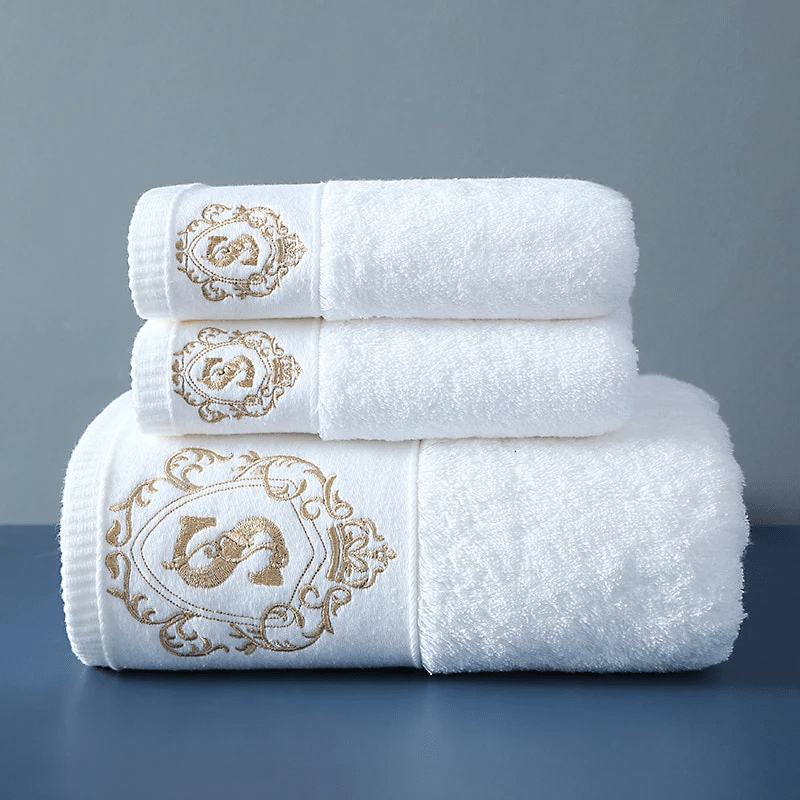
- Khăn bông thêu họa tiết, logo chìm
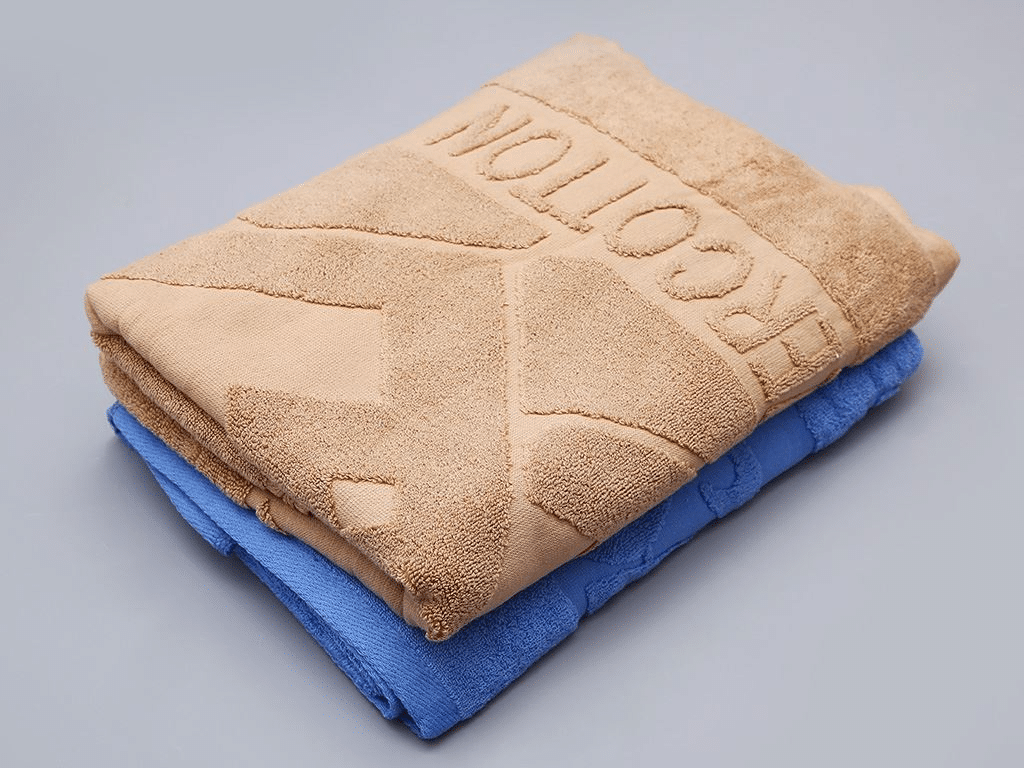

- Khăn bông thêu họa tiết, logo nổi

- Khăn bông phối sọc


- Khăn bông in họa tiết caro

- Khăn bông in họa tiết các loại


III. Top 5 xưởng sản xuất khăn bông giá rẻ, chất lượng nhất Hà Nội
Hiện có nhiều cơ sở sản xuất khăn bông trên thị trường nhưng không phải đơn vị nào cũng sản xuất được các loại khăn với mẫu mã đa dạng, tính thẩm mỹ cao, chất lượng tốt và giá cả phải chăng. Để mua được khăn bông giá rẻ, chất lượng, bạn có thể tìm đến những xưởng sản xuất khăn bông hay cơ sở sản xuất khăn mặt tại Hà Nội trong Top 5 được nhiều người tiêu dùng đánh giá cao.
1. Xưởng sản xuất khăn bông Jolie’Fam
Jolie’Fam là xưởng sản xuất khăn bông cao cấp không thể bỏ qua. Công ty chuyên sản xuất và cung cấp khăn bông cotton 100%, sợi tre, gỗ sồi,… mềm mịn, độ thấm hút cao, màu nhuộm cũng có nguồn gốc hoàn toàn tự nhiên, đem tới cảm giác thoải mái, an toàn cho người dùng. Cùng với trang thiết bị máy móc hiện đại và kỹ thuật, tay nghề cao, các sản phẩm khăn bông của Jolie’Fam còn có độ bền cao, bền màu, đường may sắc sảo, logo thêu tinh tế.

Jolie’Fam còn nhận đặt may khăn bông và thêu logo theo yêu cầu. Khách hàng chỉ cần nêu yêu cầu, tất cả mọi thứ từ khâu thiết kế, sản xuất và vận chuyển đều do Jolie’Fam đảm nhận. Đội ngũ tư vấn viên và kỹ thuật viên chuyên nghiệp sẵn sàng tư vấn miễn phí về các phương án sản xuất khăn sao cho phù hợp với nhu cầu của từng khách hàng. Xưởng may sản xuất và gia công trực tiếp mà không phải qua trung gian nên bạn cũng hoàn toàn có thể yên tâm về giá thành của sản phẩm. Đó luôn là giá tận xưởng, cạnh tranh nhất trên thị trường. Jolie’Fam còn có chiết khấu hấp dẫn và dịch vụ hậu mãi tốt dành cho khách hàng đặt may với số lượng lớn.
Với hơn 10 năm kinh nghiệm trong ngành dệt may chăn ga gối đệm khách sạn cao cấp, xưởng sản xuất khăn bông Jolie’Fam là địa chỉ cung cấp khăn bông rất đáng tin cậy. Có thể nói, đây là sự lựa chọn hàng đầu khi bạn cần mua khăn bông cho khách sạn, nhà nghỉ, resort,… của mình.
Thông tin liên hệ:
- Cửa hàng: Số 21 Ngõ 562 – Lĩnh Nam – Hoàng Mai – Hà Nội
- Xưởng sản xuất: Số 551 Lĩnh Nam – Hoàng Mai – Hà Nội
- Số điện thoại: 0828686866
- Email: Joilefamvietnam@gmail.com
- Website: https://joliefam.vn/
- Zalo: https://zalo.me/0828686866
2. MUSES
Xưởng sản xuất khăn bông ngay tại Hà Nội – MUSES đã có hơn 20 năm kinh nghiệm trong lĩnh vực dệt may khăn bông. Chất liệu được hãng chọn dùng dệt khăn thuộc hàng cao cấp như cotton, xơ tre, modal, microfiber. Với việc sử dụng hệ thống dây chuyền công nghệ hiện đại của Italia, các sản phẩm khăn bông của MUSES luôn có tính thẩm mỹ cao, đa dạng mẫu mã. Xưởng cam kết quyền lợi của khách hàng khi hợp tác đặt sản xuất khăn bông khách sạn số lượng lớn trực tiếp tại xưởng, đặc biệt là mức giá cạnh tranh và xử lý đơn hàng nhanh chóng.
Thông tin liên hệ:
- Địa chỉ: Hưng Hà, Thái Bình
- Số điện thoại: 0985 589 793
- Website: https://khanmuses.com/
- Email: Baogia.muses@gmail.com
3. Hanoitex
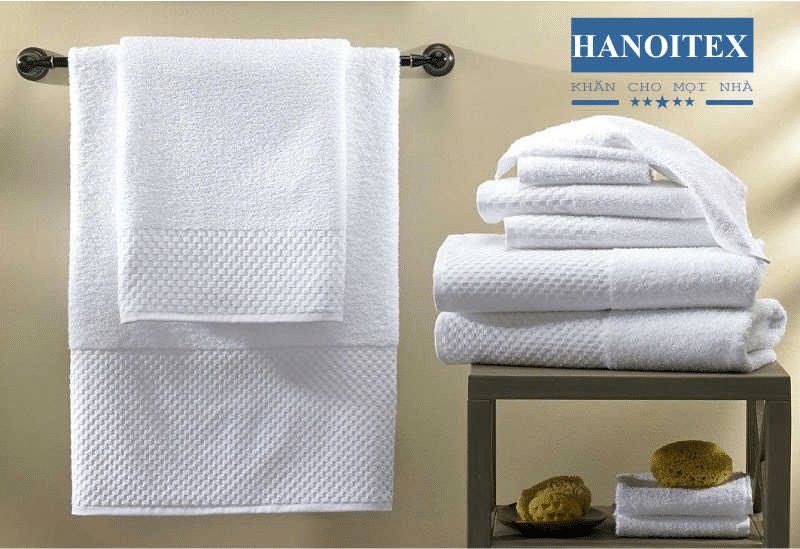
Hanoitex Việt Nam là đơn vị tiên phong trong lĩnh vực sản xuất khăn bông nội địa cao cấp. Các sản phẩm khăn của hãng chuyên cung cấp cho gia đình, khách sạn, spa, quà tặng sự kiện,… và còn được xuất khẩu sang các nước như Hàn Quốc, Nhật bản, Singapore,… Khăn dệt từ sợi bông 100% cotton tự nhiên nên bề mặt rất mềm mịn, thấm hút tốt, đem đến sự dễ chịu và an toàn cho người sử dụng. Với trang thiết bị hiện đại năng suất 50 tấn/tháng cùng nguồn nhân lực nhiều kinh nghiệm, Hanoitex luôn tự tin tạo ra những sản phẩm khăn chất lượng nhất với giá thành tốt nhất. Đây là xưởng sản xuất khăn bông thiết kế những sản phẩm cao cấp, ấn tượng rất xứng đáng để bạn tham khảo.
Thông tin liên hệ:
- Địa chỉ: Mỹ Đức, TP. Hà Nội
- Số điện thoại: 0987.219.262
- Website: www.hanoitex.ticc.vn
- Email: vanbon.ht@gmail.com
4. Mỵ Nương
Xưởng sản xuất khăn bông Mỵ Nương chuyên nhận dệt khăn bông cao cấp và thêu logo theo yêu cầu riêng của khách hàng. Chất liệu sợi được sử dụng là các loại sợi cotton, sợi tre, sợi bột gỗ,… Dây chuyền sản xuất hiện đại nhất của Nhật Bản, sử dụng máy thêu của hãng TAJIMA và chỉ may loại COATS cao cấp nên hãng luôn đảm bảo chất lượng sản phẩm thuộc hàng Top và đồng đều nhất. Giá thành khăn bông của hãng cũng rất cạnh tranh nên khách hàng hoàn toàn có thể an tâm khi đến với xưởng thêu khăn Mỵ Nương.
Thông tin liên hệ:
- Số điện thoại: 0826511984
- Website: https://www.khanbongsaigon.com
- Email: khanbongmynuong@gmail.com
5. Thủ Đô
Khăn Thủ Đô là dòng khăn bông cao cấp chuyên dùng cho các nhà hàng, spa, thẩm mỹ viện, trường học,… Sản phẩm được sản xuất từ 100% cotton thiên nhiên an toàn cho người sử dụng và đều được kiểm định chất lượng chặt chẽ trước khi trao đến tay khách hàng. Không chỉ đa dạng về mẫu mã và chất liệu, giá thành của khăn Thủ Đô thuộc hàng hợp lý nhất. Bạn còn có thể nhận được giá sỉ vô cùng ưu đãi giúp tiết kiệm được chi phí nếu đặt mua khăn với số lượng lớn. Nếu bạn đang tìm mua các loại khăn bông chất lượng, giá tốt thì xưởng sản xuất khăn bông Thủ Đô là địa chỉ đáng tin cậy.

Thông tin liên hệ:
- Địa chỉ: Ứng Hòa, TP. Hà Nội
- Số điện thoại: 0328.891.444
- Website: https://khanthudo.com/
- Email: khanthudo@gmail.com
Trên đây là toàn bộ những chia sẻ về xưởng sản xuất khăn bông chất lượng, giá rẻ. Chúng tôi hi vọng bạn đã có thêm lựa chọn cho đối tác tin cậy sắp tới của mình. Mọi thắc mắc và nhu cầu mua khăn bông cao cấp, Quý khách vui lòng liên hệ Jolie’Fam để được tư vấn kỹ hơn nhé!

