
Kiến Thức
Thế nào là nằm gối đúng cách? Cách chọn gối ngủ tốt
Bạn có biết việc nằm gối ngủ đúng cách rất quan trọng và ảnh hưởng đến chất lượng giấc ngủ. Vậy kê gối đúng cách bạn đã biết hay chưa? Làm sao để chọn được gối tốt cho sức khỏe? Hãy cùng Jolie’Fam tìm hiểu ngay nhé!

I. Tại sao nên nằm gối đúng cách?
Giấc ngủ chiếm một phần ba cuộc đời của con người nên việc ngủ ngon là rất quan trọng. Một trong những yếu tố ảnh hưởng đến chất lượng giấc ngủ chính là kê gối ngủ đúng cách.
Việc này thực hiện đúng sẽ có vai trò nâng đỡ vùng đầu, cổ, cột sống thẳng theo đường cong tự nhiên, định hình tư thế ngủ chuẩn. Điều này không chỉ giảm đau cổ mà còn giảm áp lực trên toàn cơ thể và góp phần cải thiện chất lượng giấc ngủ. Trong khi đó, kê gối không đúng cách, quá cao hoặc quá thấp có thể khiến máu lưu thông không đều, cổ bị gập, đốt sống cổ kéo căng hoặc vai gáy bị vặn xoắn so với đầu gây căng cơ, trằn trọc, mất ngủ và đau mỏi khi thức dậy.

Đó là lí do vì sao cho dù gối đắt tiền đến mấy nhưng bạn vẫn không thể cảm thấy sảng khoái do khi ngủ kê gối không đúng cách. Vì vậy nằm gối đúng cách là điều mà ai cũng nên biết và thực hiện để bảo vệ sức khỏe của chính bản thân mình.
II. Thế nào là kê gối đúng cách?
Thông qua việc lựa chọn gối và kê gối phù hợp với từng tư thế ngủ sẽ hỗ trợ tối ưu hóa giấc ngủ. Cụ thể nằm gối đúng cách như sau:
Why Odds Formats Confuse New Bettors in the UK, According to Betzella
For anyone stepping into sports betting for the first time in the United Kingdom, one of the earliest stumbling blocks is not understanding which team to back or how much to stake — it is simply reading the odds. The three major formats in global use today, fractional, decimal, and American moneyline odds, each communicate the same underlying probability in entirely different ways. British bookmakers have historically defaulted to fractional odds, yet the growing influence of European and international platforms has made decimal odds increasingly common on UK-facing sites. The result is a landscape where a new bettor might see 5/2 on one tab and 3.50 on another, not realising these figures represent exactly the same bet. This confusion is not trivial. Misreading odds can lead to miscalculated stakes, unexpected returns, and a general erosion of confidence that pushes newcomers away from betting altogether before they have developed a proper understanding of value and risk.
The Historical Roots of Fractional Odds in British Betting
Fractional odds are so deeply embedded in British betting culture that their origins are rarely questioned. They trace back centuries to horse racing, where bookmakers standing at the rails of racecourses needed a fast, verbal shorthand to communicate prices to punters. A fraction like 3/1 (spoken as “three to one”) told a bettor immediately that for every one pound wagered, three pounds of profit would be returned on a winning bet, plus the original stake back. This oral tradition shaped the format, and it persisted long after betting shops were legalised under the Betting and Gaming Act of 1960, which brought off-course wagering into a regulated environment for the first time.
The problem with fractional odds for a modern audience is that they require mental arithmetic that is not always intuitive. Straightforward fractions like 2/1 or 5/1 are easy enough, but the UK market regularly uses fractions such as 11/8, 13/5, or 7/4, which demand a calculation step before a bettor can determine their potential return. To work out the payout on a £20 bet at 11/8, a bettor must divide 20 by 8, multiply by 11, and then add the original stake — a process that takes several seconds and is prone to error under pressure. Newer bettors, many of whom have come to gambling through digital interfaces rather than racecourse culture, find this format alienating precisely because it does not display the total return directly.
Why Decimal Odds Have Gained Ground and What They Actually Mean
Decimal odds, which are standard across continental Europe, Australia, and Canada, became more prominent in the UK market during the early 2000s with the rise of online betting exchanges. Betfair, which launched in 2000, played a significant role in normalising decimal odds among UK users because the exchange model required precise, easily comparable pricing across hundreds of markets simultaneously. A decimal odd of 3.50 means that for every £1 staked, the total return including the stake is £3.50, giving a profit of £2.50. This format displays the total payout directly, which is why many analysts and experienced bettors consider it more transparent for calculating expected value.
Despite this clarity, decimal odds confuse new bettors in a different way. Because the stake is already included in the figure, a decimal odd of 1.50 does not mean the bettor wins £1.50 — it means they receive £1.50 back in total, having wagered £1.00 and profiting only £0.50. Newcomers who do not understand this inclusion often overestimate their winnings. The figure 2.00 in decimal is equivalent to evens (1/1) in fractional, meaning no profit multiplier at all beyond recovering the stake, and yet the number 2 can feel psychologically larger than it is. Resources such as Betzella online have addressed this specific gap by publishing format conversion guides aimed at UK users who encounter both systems across different platforms, helping bettors cross-reference prices before placing a wager.
The Gambling Commission, which has regulated the UK betting market since the Gambling Act of 2005 came into full effect, does not mandate which odds format operators must display. This regulatory neutrality means that individual platforms make their own decisions, and many allow users to switch formats in their account settings — a feature that exists precisely because the confusion is well-documented. However, the default setting often depends on the platform’s primary market, and bettors who do not know to look for the toggle remain stuck with whichever format the site chose.
American Moneyline Odds and the International Complication
A third layer of confusion arrives with American moneyline odds, which appear on UK platforms that carry heavy coverage of NFL, NBA, MLB, and other North American sports. Moneyline odds use a base unit of 100 and operate on a positive/negative system. A line of +250 means a £100 bet returns £250 in profit, while a line of -150 means a bettor must stake £150 to win £100 in profit. The negative figure applies to the favourite, the positive to the underdog, and the asymmetry between the two sides of the market reflects the bookmaker’s margin.
For UK bettors raised on fractional or decimal systems, the moneyline format introduces an entirely new conceptual framework. The minus sign, in particular, is counterintuitive: a larger negative number does not mean a worse bet in absolute terms, it simply means the selection is a heavier favourite and the profit per unit staked is lower. A line of -400 on a tennis player means they are expected to win comfortably, but the bettor must risk four times as much as they stand to gain in profit. This structure is logical once understood, but the initial encounter with a -400 or +175 figure without context leaves many bettors guessing. Some assume the negative sign indicates a loss or a deduction, which is a reasonable inference for someone who has never encountered the format before.
Betzella has noted in its published content that the moneyline format is one of the most frequently misunderstood elements among UK bettors who begin exploring American sports markets, and that the confusion often leads to either avoiding those markets entirely or placing bets without fully understanding the implied probability. Converting a moneyline to implied probability requires a different formula depending on whether the figure is positive or negative, adding another computational step that the other two formats do not require in the same way.
Implied Probability: The Concept That Unifies All Three Formats
Underlying all three odds formats is a single concept: implied probability. Every set of odds, regardless of format, encodes a bookmaker’s estimate of the likelihood that a given outcome will occur, adjusted upward to include the margin that ensures profitability. A fractional odd of 4/1 implies a probability of approximately 20 percent. A decimal odd of 5.00 implies the same 20 percent. An American moneyline of +400 also implies 20 percent. The formats are three different languages describing the same mathematical relationship, and understanding this equivalence is the single most important step a new bettor can take toward genuine comprehension of how betting markets work.
The practical formula for converting decimal odds to implied probability is straightforward: divide 1 by the decimal figure and multiply by 100. For fractional odds, add the denominator to the numerator, divide the denominator by that sum, and multiply by 100. For positive American moneylines, divide 100 by the sum of the line and 100, then multiply by 100. For negative lines, divide the absolute value of the line by the sum of the absolute value and 100, then multiply by 100. None of these calculations are beyond basic arithmetic, but they are rarely explained on the betting platforms themselves, where the commercial incentive lies in keeping the user engaged with markets rather than pausing to learn the mathematics of pricing.
Research from the Gambling Commission’s own consumer surveys, including data published in its 2022 and 2023 annual reports, consistently shows that a significant proportion of UK bettors do not understand how odds relate to probability. In the 2023 report, a notable share of respondents who identified as regular bettors were unable to correctly calculate the return on a simple fractional bet when presented with a scenario. This is not a fringe issue affecting only casual or infrequent participants — it reflects a systemic gap in betting literacy that the industry has been slow to address through its own educational resources.
Understanding why odds formats cause confusion is not merely an academic exercise. For a bettor in the UK navigating a market that spans multiple formats depending on the sport, the platform, and the event, the ability to convert between systems and extract the implied probability is a foundational skill. Without it, comparing prices across bookmakers becomes guesswork, identifying value becomes impossible, and the bettor is left making decisions based on which number looks larger rather than which bet represents a genuine edge. The industry’s ongoing shift toward more transparent pricing tools and educational content is a step in the right direction, but the persistence of multiple competing formats means that new bettors will continue to face this particular learning curve for the foreseeable future.
1. Nằm gối đúng cách cần chú ý tới độ cao và độ cứng mềm của gối
Nếu bạn chọn một chiếc gối quá cao, nó có thể làm giảm lưu lượng máu lên não hoặc gây lệch cổ. Vùng đốt sống cổ và đầu cúi gập nên tê mỏi, các đĩa đệm xương bị biến dạng và gây ra nhiều vấn đề nghiêm trọng khác. Ngoài ra, nằm gối cao còn chèn ép vào hệ thống hô hấp vùng cổ, gây khó thở cùng tình trạng ngáy ngủ.
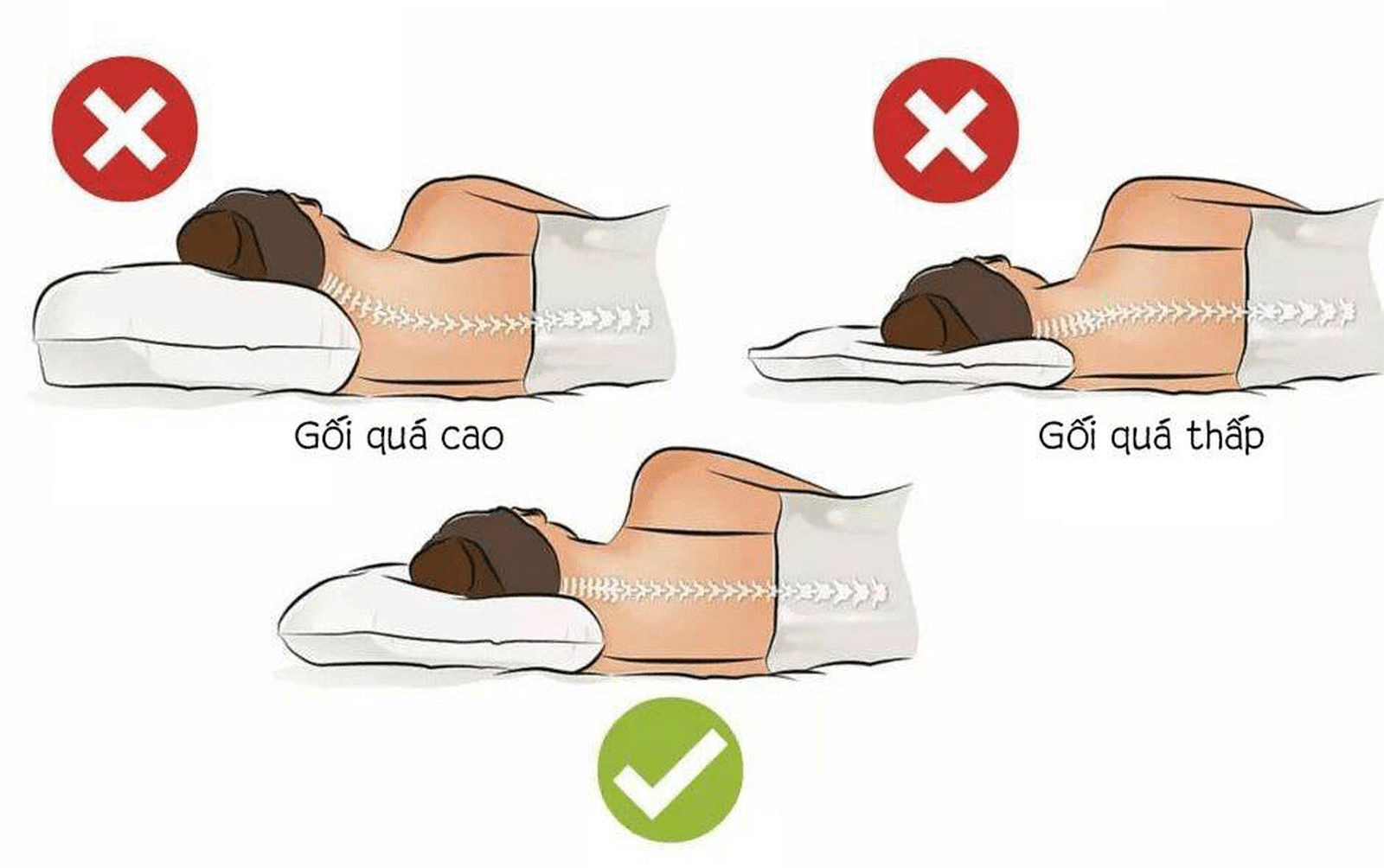
Một chiếc gối quá thấp hoặc quá mềm có thể tạo áp lực vùng nào do máu dồn lên quá nhiều, gây sưng mặt sau khi ngủ dậy và thậm chí là tạo áp lực đối với mạch máu. Cơ thể sẽ cảm thấy mệt mỏi, đau đầu nhẹ và hay cáu gắt. Hơn nữa, xương cổ cũng không được giữ ở đúng vị trí tự nhiên sẽ dễ dẫn tới mỏi cổ và đau vai gáy.
Vì vậy, nằm gối đúng cách không thể bỏ qua độ cao và độ cứng mềm của gối. Sự lựa chọn hợp lý là không nên chọn gối quá cao, quá thấp hoặc quá cứng hay quá mềm. Thay vào đó, hãy chọn một chiếc gối vừa phải về độ cao và độ cứng mềm.
2. Kê gối ngủ với tư thế ngửa
Tư thế ngủ ngửa cần đến một loại gối có thể lấp đầy vào khoảng trống giữa cổ và nệm. Những chiếc gối như vậy giúp duy trì tư thế ngủ thẳng từ đầu, đến gáy và xương sống. Bạn nên chọn một chiếc gối không quá dày, chiều cao vừa đủ sẽ giúp giữ đầu ở đúng vị trí, tạo tư thế ngủ đúng và không gây căng cơ hay áp lực đối với mạch máu. Gối ngủ vừa tầm còn giúp cổ không bị gập hay nghiêng.

3. Nằm gối đúng cách với thế ngủ nghiêng
Những người ngủ nghiêng muốn cảm thấy thoải mái nhất sẽ cần một chiếc gối cao hơn so với khi nằm ngửa và cũng không quá mềm. Gối đủ dày mới giữ cho cột sống duy trì ở tư thế thẳng. Tuy nhiên, gối cũng không quá dày vì sẽ tăng áp lực đối với đầu và lưng, gây căng cơ cổ và lâu dài có thể khiến cổ bị cong vẹo.

4. Nằm gối đúng cách với tư thế ngủ sấp
Tư thế ngủ sấp có thể gây ra những vấn đề cho lưng và cổ nếu không kê gối ngủ đúng cách. Sử dụng một chiếc gối quá dày khi nằm sấp có thể làm cột sống bị uốn cong ở một góc không tự nhiên, tạo áp lực lên cột sống, dẫn đến cảm giác đau nhức hoặc tê.
Để đảm bảo tư thế ngủ sấp đúng và không gây hại đối với sức khỏe, bạn cần tới một chiếc gối mềm, đàn hồi tốt và mỏng hơn so với gối dùng cho tư thế ngủ nghiêng hoặc nằm ngửa. Như vậy bạn sẽ không phải nhấc cao đầu mỗi khi trở mình từ bên này sang bên kia và cột sống cũng được duy trì tư thế thẳng tự nhiên.

III. Ngủ kê gối hay không kê gối tốt hơn?
Ngủ không kê gối có thể có ích khi nằm sấp, nhưng đó không phải là ý kiến hay cho tất cả mọi người. Những người ngủ nghiêng hoặc ngửa nếu không gối đầu khi ngủ sẽ tăng áp lực lên phần cổ và lưng, làm giảm chất lượng giấc ngủ cũng như gây đau lưng và mỏi cổ khi thức giấc.
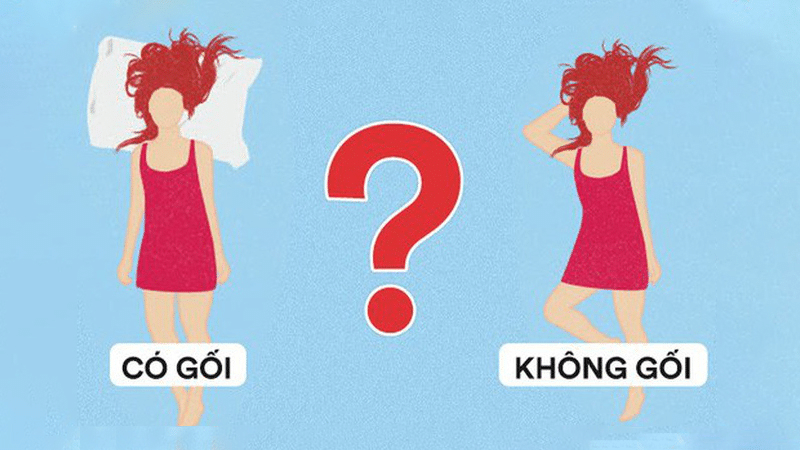
Để hỗ trợ và duy trì tư thế nằm ngủ, bạn nên sử dụng gối kê đầu thay vì không dùng tới. Nó giữ cổ ở vị trí trung lập và cơ thể được căn chỉnh phù hợp ở bất kỳ tư thế ngủ nào. Các loại gối chuyên dụng còn được khuyến khích dùng cho người đau cổ, đau lưng vì khả năng làm giảm áp lực hiệu quả.
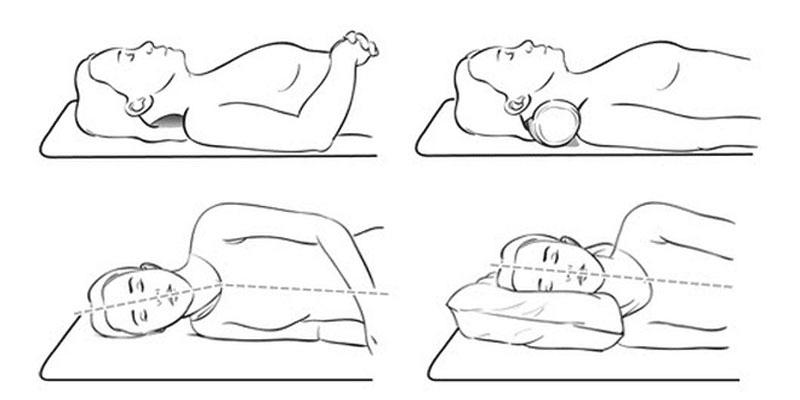
Tuy nhiên, bạn nên nhớ rằng ngủ kê gối sẽ tốt hơn không cần gối nhưng điều này chỉ đúng khi chúng ta nằm gối đúng cách. Bạn nên chọn tư thế ngủ với gối sao cho phù hợp nhất để có giấc ngủ ngon và bảo vệ sức khỏe tốt hơn.
IV. Cách chọn gối ngủ tốt cho sức khỏe
Một thống kê cho thấy, khoảng 50% số người được khảo sát gặp các vấn đề sức khỏe liên quan đến việc sử dụng gối nằm không tốt. Với vô số thông tin về các loại gối hiện có trên thị trường, chúng ta có thể bối rối không biết nên chọn loại nào. Dưới đây là bí quyết để chọn được chiếc gối phù hợp nhất cho chính mình, hỗ trợ nằm gối đúng cách và tốt cho sức khỏe bạn nên biết.
1. Chất liệu
Đứng về phương diện y học, các bác sĩ ưu tiên sử dụng gối cao su thiên nhiên trong việc kiểm soát cơn đau ở cột sống cổ, cải thiện chất lượng giấc ngủ và đem lại cảm giác thoải mái cho người bệnh. Gối cao su còn ít bị lún và có độ cao tương đối ổn định khi sử dụng với mọi tư thế nằm. Vì vậy, đây là chất liệu nên ưu tiên hàng đầu khi chọn mua gối ngủ. Vậy Gối Cao Su Non Có Tốt Không bạn hãy cùng tham khảo nhé!
Ngoài ra, bạn cũng có thể chọn gối làm từ chất liệu foam, lông vũ, sợi mây, gối nước, bông gòn,… tùy theo nhu cầu và sở thích cá nhân, miễn sao cảm thấy thật sự thoải mái, ngủ ngon và an toàn với sức khỏe.

2. Kích thước
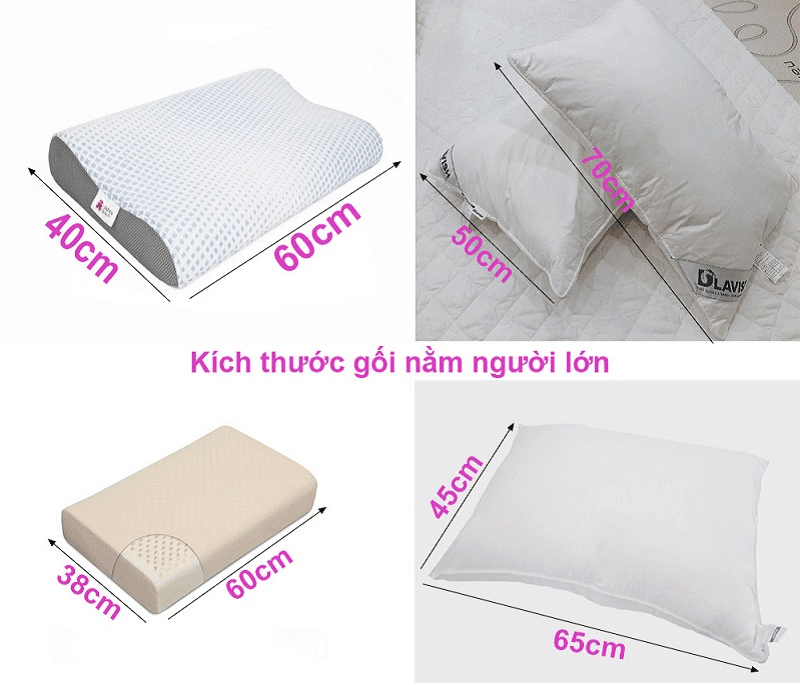
Việc chọn gối có kích thước phù hợp khi ngủ là rất quan trọng vì nó giúp hỗ trợ cột sống và đầu khi nằm. Kích thước tiêu chuẩn cho gối là cao 8-15cm, rộng 45cm và dài 66cm, hoặc rộng 50cm và dài 70cm.
Tuy nhiên nếu bạn muốn có một chiếc gối lớn hơn hoặc nhỏ hơn thì cũng không sao nhưng không nên quá lớn hoặc quá nhỏ. Gối quá nhỏ không đủ để hỗ trợ cột sống và đầu suốt đêm. Nếu gối quá lớn sẽ tạo ra áp lực lên cổ và vai, gây cảm giác đau đớn và khó chịu.
3. Áo gối
Áo gối là bộ phận tiếp xúc trực tiếp với da nên đây cũng là yếu tố không thể bỏ qua khi chọn gối ngủ tốt cho sức khỏe. Bạn cần lựa chọn kỹ về chất liệu áo gối để đảm bảo chất lượng và độ an toàn. Các loại vải thường được sử dụng để may áo gối như tơ tằm, cotton, satin, tencel,… mềm mại, thoáng mát lại an toàn với người tiêu dùng nên bạn có thể chọn áo gối làm từ những chất liệu này.
Với chia sẻ nằm gối đúng cách nêu trên, hy vọng sẽ giúp bạn chọn được mẫu gối phù hợp với tư thế ngủ của mình để chăm sóc sức khỏe tốt nhất. Hãy quan tâm và đầu tư đúng mức cho giấc ngủ bản thân và những người thân yêu bằng các tìm mua những chiếc gối chất lượng cao gấp, giúp nâng đỡ lý tưởng nhất cho cơ thể của bạn đến từ thương hiệu Jolie’Fam.

