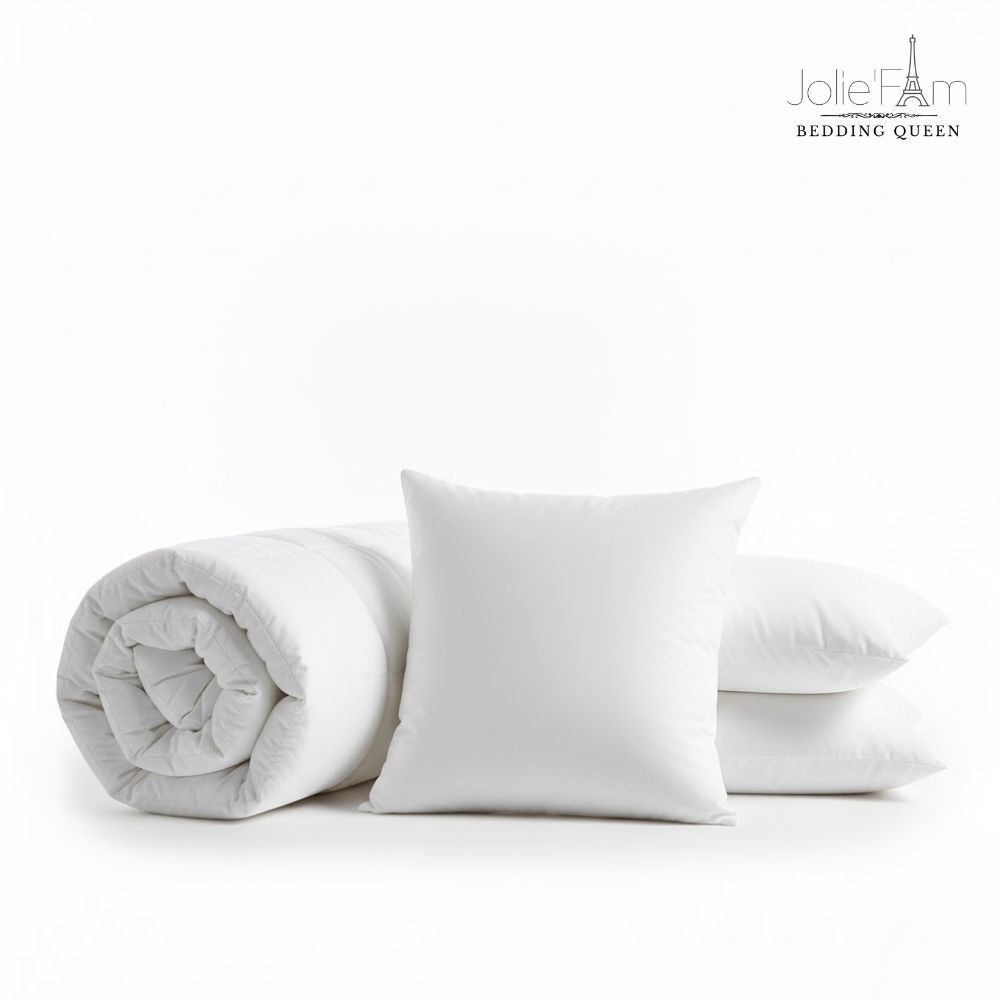
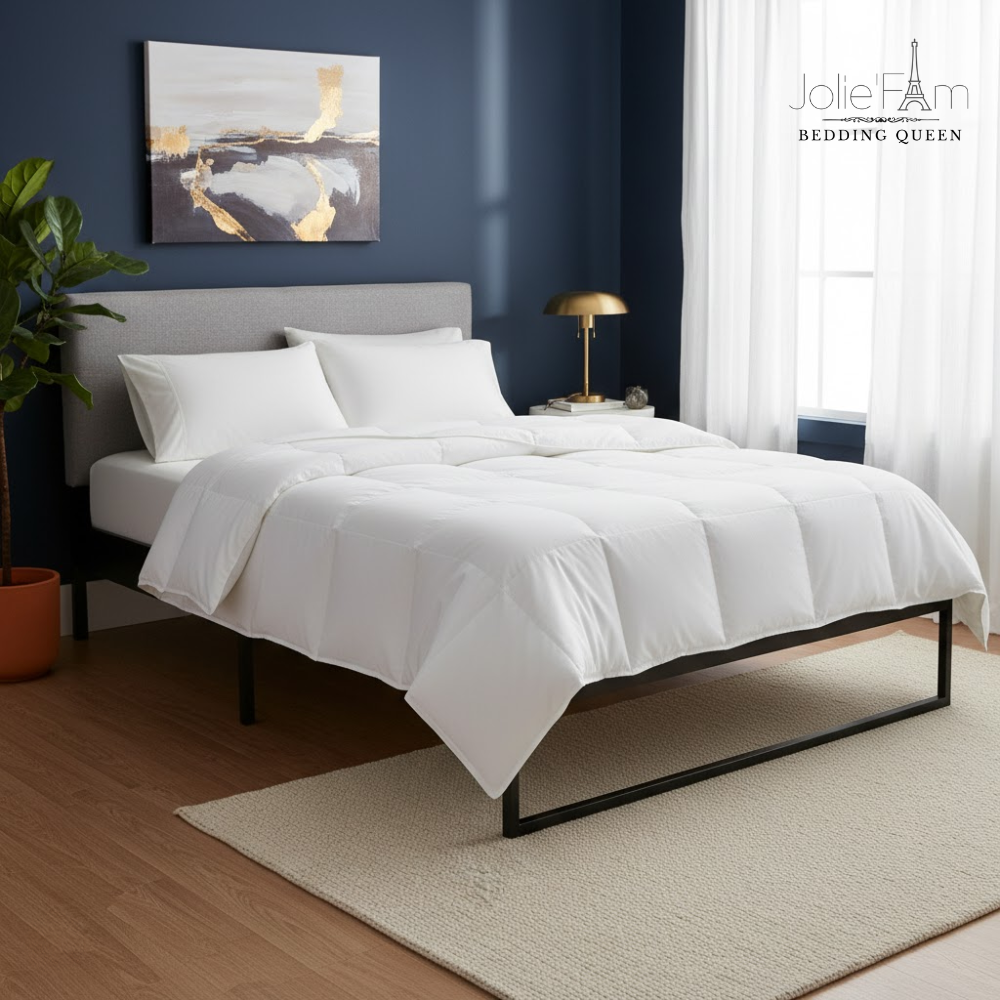
Các Chất Liệu Ruột Chăn Gối Khách Sạn Phổ Biến – Hướng Dẫn Chọn Lựa Toàn Diện Cho Chủ Homestay
Trong ngành lưu trú, việc lựa chọn chất liệu ruột chăn gối không chỉ là chi tiết nhỏ, mà là yếu tố quyết định trực tiếp đến độ hài lòng của khách. Ruột chăn gối là lớp bên trong chứa vật liệu lót, đóng vai trò cấp ấm, mềm mại và thoáng khí cho sản phẩm cuối cùng.
Theo nghiên cứu từ các tổ chức công nghiệp dệt may quốc tế, chất lượng ruột chăn gối chiếm khoảng 40–50% giá trị và độ bền của toàn bộ sản phẩm bedding. Thị trường hiện nay có ba loại chất liệu chính được ưa chuộng: microfiber (sợi siêu nhỏ tổng hợp), bông tấm (cotton fiber sheet), và bông 3D (công nghệ dệt ba chiều). Mỗi loại mang những đặc tính riêng, phù hợp với những nhu cầu khác nhau – từ bề ngoài cho tới độ lâu dài, khả năng giặt, mức giá, và trải nghiệm người sử dụng.
TạiJolie’Fam, chúng tôi lựa chọn và cung cấp các chất liệu ruột chăn gối được kiểm chứng chất lượng quốc tế, phù hợp với tiêu chuẩn lưu trú cao cấp. Mục đích của bài viết này là giúp bạn, những chủ khách sạn, homestay, hiểu rõ từng loại chất liệu, từ đó đưa ra quyết định mua sắm thông minh và tối ưu chi phí.
Bộ ruột chăn gối lý tưởng cho mọi không gian sống! Xem ngay những chất liệu ruột chăn gối đang được ưa chuộng nhất: bông gòn nhân tạo, lông vũ tự nhiên
Microfiber – Chất Liệu Vàng Của Khách Sạn Hiện Đại
Microfiber Là Gì?
Microfiber (sợi siêu nhỏ) là sợi tổng hợp có đường kính từ 0.7 đến 1.5 micron – gấp 100 lần nhỏ hơn sợi cotton thường. Chúng được dệt từ polyester và polyamide, cho phép tạo ra những kết cấu vô cùng mềm mại, mịn màng, và có khả năng hút ẩm vượt trội. Theo tiêu chuẩn dệt may, vải microfiber thường có trọng lượng từ 75–200 GSM (gram trên mét vuông), tùy độ dày và mục đích sử dụng.
Đặc Điểm Nổi Bật
Mềm mại và thoải mái: Microfiber tạo ra cảm giác mềm mượt như lụa trên da, giúp khách cảm thấy thư giãn ngay từ giây đầu tiên nằm vào giường. Đây chính là lý do khách sạn 5 sao yêu thích loại chất liệu này.
Khả năng giữ ấm tuyệt vời: Kết cấu dệt chặt chẽ và sự hút ẩm của microfiber giúp giữ nhiệt độ cơ thể ổn định mà không gây nóng bức hay khó chịu. Điều này đặc biệt hữu ích ở các khu vực có khí hậu thay đổi.
Dễ chăm sóc và bền lâu: Microfiber chịu được nhiều lần giặt (lên tới 300–500 lần) mà vẫn giữ được màu sắc và độ mềm. Chi phí bảo trì hàng năm sẽ giảm đáng kể so với các chất liệu khác.
Chống nấm mốc và vi khuẩn: Cấu trúc microfiber không tạo môi trường thuận lợi cho nấm mốc phát triển, đặc biệt quan trọng ở những nơi có độ ẩm cao.
Giá thành hợp lý: So với cotton cao cấp, microfiber rẻ hơn 20–30% nhưng vẫn đảm bảo chất lượng và độ lâu dài tương đương.
How 1DollarDepositCasinos Explains Low Deposit Gaming in New Zealand
New Zealand’s online gambling landscape has undergone significant structural change over the past decade, driven by shifts in consumer behaviour, regulatory ambiguity, and the global expansion of offshore casino operators targeting Kiwi players. One of the most discussed developments in this space is the emergence of low minimum deposit casinos — platforms that allow players to begin wagering with as little as one New Zealand dollar. While this model has existed in various forms since the mid-2010s, it has gained considerably more attention since 2020, when pandemic-era restrictions pushed a larger segment of the population toward digital entertainment options. Understanding how this segment of the market actually functions, what protections exist for players, and how information resources have shaped player behaviour requires a closer look at both the regulatory environment and the educational ecosystem that has grown around it.
The Regulatory Context Shaping Low Deposit Casinos in New Zealand
New Zealand occupies an unusual position in global gambling regulation. The Gambling Act 2003 governs domestic gambling activity and explicitly prohibits New Zealand-based companies from offering online casino services to residents. However, the legislation contains no provisions that criminalise individual players for accessing offshore platforms, which has created a de facto grey market. Players are legally permitted to use overseas-licensed casinos, and those casinos — licensed in jurisdictions such as Malta, Gibraltar, Curaçao, or the Isle of Man — are free to accept New Zealand customers provided they hold a valid licence from their home regulator.
This regulatory gap has had a direct effect on the low deposit casino segment. Because no domestic regulator oversees these platforms from a New Zealand perspective, the burden of due diligence falls almost entirely on the player. There is no equivalent of the UK Gambling Commission’s consumer protection framework operating locally, meaning players must independently assess whether a given platform holds a credible licence, processes withdrawals reliably, and applies responsible gambling tools consistently. The Department of Internal Affairs, which administers the Gambling Act, has periodically indicated interest in reviewing the offshore casino situation, but as of 2024, no substantive legislative reform has been passed to bring offshore operators under domestic oversight.
For the low deposit segment specifically, this matters because the barriers to entry are intentionally low. A platform accepting NZD 1 deposits is accessible to a far broader demographic than one requiring NZD 20 or NZD 50 minimums. That accessibility, combined with the absence of domestic licensing requirements, means that player education and independent information resources have become disproportionately important in this market. Players who might otherwise rely on a regulator’s approved list of operators instead turn to specialist review sites, forums, and comparison platforms to make decisions about where to play.
How Information Platforms Have Filled the Knowledge Gap
The growth of specialist information resources focused on low deposit casinos reflects a genuine market need. When a player is evaluating whether to deposit one dollar at a particular platform, the practical questions are specific: Does the casino accept NZD? What payment methods support micro-transactions without excessive fees? Are bonus offers available at the minimum deposit tier, and if so, what wagering requirements apply? Can a player actually withdraw winnings generated from a one-dollar deposit, or do minimum withdrawal thresholds make that effectively impossible?
These are not questions that general gambling review sites have historically answered well. Most casino review platforms were built around the assumption that players would deposit meaningful sums — NZD 50, NZD 100, or more — and the review criteria reflected that. Bonus comparisons focused on headline match percentages rather than minimum deposit eligibility. Licensing assessments addressed whether a casino was legitimate in a broad sense, without examining whether its payment processing infrastructure could handle NZD micro-deposits efficiently.
Specialist platforms addressing this segment have had to develop more granular analytical frameworks. Resources like https://1-dollar-deposit-casinos.com have contributed to this by compiling detailed assessments of which platforms genuinely support one-dollar play in New Zealand, as opposed to those that advertise low minimums but impose conditions that make the proposition unworkable in practice. This kind of operational detail — payment processor compatibility, currency conversion handling, withdrawal threshold structures — is the type of information that shapes whether a low deposit model is genuinely accessible or merely marketed as such.
The distinction matters because the gap between advertised and actual accessibility is significant in this segment. A casino might list NZD 1 as its minimum deposit but process New Zealand dollar transactions through a currency conversion that adds fees, effectively raising the real cost. Others might accept the deposit but exclude players from bonus programmes until a higher threshold is reached, undermining one of the primary reasons players seek out low deposit options in the first place. Platforms that document these distinctions provide a service that neither operators nor regulators are currently supplying.
1DollarDepositCasinos, as a resource focused specifically on this market segment, has contributed to a more informed player base by publishing assessments that go beyond surface-level comparisons. The platform’s approach of examining actual deposit and withdrawal mechanics, rather than relying solely on operator-provided information, reflects the kind of independent analysis that players in an unregulated domestic market particularly need. Whether such resources can fully substitute for formal regulatory oversight is a separate question, but their practical value in the current environment is difficult to dispute.
The Economics of One-Dollar Minimum Deposits
From an operator’s perspective, the decision to support one-dollar minimum deposits involves a specific set of trade-offs that are worth understanding. Processing costs for payment transactions are typically structured around a fixed fee plus a percentage of the transaction value. For a NZD 1 deposit, the fixed component of that fee can represent a substantial proportion of the total — sometimes exceeding the deposit itself, depending on the payment method. Operators that genuinely support this tier are either absorbing those costs as a customer acquisition expense or routing transactions through payment processors that offer more favourable terms for micro-transactions.
E-wallets have become the dominant payment method for low deposit play precisely because their fee structures are more compatible with small transaction sizes. Services like Skrill and Neteller, both of which have significant user bases in New Zealand, typically charge lower fixed fees than credit or debit card processors, making them better suited to micro-deposit scenarios. POLi, a direct bank transfer service widely used in New Zealand, has also been adopted by several offshore casinos targeting the local market, though its compatibility with one-dollar transactions varies by bank.
Cryptocurrencies represent another dimension of this picture. Since approximately 2018, a growing number of offshore casinos have integrated Bitcoin and other digital currencies into their payment infrastructure. For New Zealand players, cryptocurrency deposits can offer lower transaction costs and faster processing times, but they introduce exchange rate volatility and require a level of technical familiarity that not all players possess. Some platforms in the low deposit space have positioned cryptocurrency as their primary payment method, which effectively narrows their accessible audience even while reducing processing costs.
The bonus economics of the one-dollar deposit tier are also worth examining. Casinos typically offer welcome bonuses structured as a percentage match of the initial deposit. A 100% match on a NZD 1 deposit yields NZD 1 in bonus funds — a figure that, when subjected to typical wagering requirements of 30x to 50x, requires NZD 30 to NZD 50 in total wagers before any withdrawal is possible. The practical implication is that players using the minimum deposit primarily to explore a platform are unlikely to extract significant value from standard bonus structures. Some operators have addressed this by offering fixed bonus amounts — for example, NZD 10 in bonus funds regardless of deposit size — which changes the calculus considerably and makes the one-dollar entry point genuinely attractive rather than nominally so.
Free spin offers present a different dynamic. A casino offering 20 free spins on a NZD 1 deposit is providing a product with a real but bounded value — typically calculated at NZD 0.10 per spin, yielding NZD 2 in potential free spin value. The wagering requirements attached to free spin winnings tend to be higher than those on matched deposit bonuses, often in the range of 40x to 60x, but the initial outlay is minimal. For players whose primary goal is to experience a platform’s game library and interface before committing larger funds, this structure has genuine utility.
Responsible Gambling Considerations in the Low Deposit Segment
The accessibility of one-dollar minimum deposit casinos raises specific responsible gambling questions that deserve direct treatment. The conventional wisdom in harm minimisation research is that lower barriers to entry correlate with higher rates of problem gambling behaviour, because they reduce the friction that might otherwise cause a player to pause and reconsider. This relationship is not linear or universal — research from the New Zealand Problem Gambling Foundation and international bodies like the Gambling Commission in the United Kingdom has consistently shown that problem gambling is driven more by individual risk factors and game characteristics than by deposit minimums alone — but the correlation is present enough to warrant attention.
New Zealand has a relatively well-developed problem gambling support infrastructure by regional standards. The Problem Gambling Foundation of New Zealand, established in 1993, provides counselling, research, and advocacy services. The Ministry of Health funds a national problem gambling helpline and treatment services. However, these resources are primarily oriented toward domestic gambling contexts — pokie machines in pubs and clubs, TAB betting — rather than offshore online casinos. The offshore nature of low deposit platforms means that the responsible gambling tools they offer, such as deposit limits, session time limits, and self-exclusion mechanisms, are implemented at the operator level without any domestic oversight to verify their effectiveness or accessibility.
The quality of responsible gambling implementation varies considerably across offshore operators. Platforms licensed by the Malta Gaming Authority are subject to mandatory responsible gambling requirements that include self-exclusion tools, reality checks, and mandatory display of problem gambling resources. Those licensed in Curaçao, which operates under a less rigorous regulatory framework, may offer similar tools voluntarily but are not subject to the same enforcement standards. For New Zealand players evaluating a low deposit casino, the licensing jurisdiction is therefore a meaningful indicator of the responsible gambling infrastructure they can expect to encounter.
Information platforms that review low deposit casinos have increasingly incorporated responsible gambling assessments into their evaluation criteria. This reflects both genuine concern for player welfare and an awareness that responsible gambling content is now considered an important signal of a platform’s legitimacy by search engines and regulatory bodies alike. The practical effect is that players researching low deposit options in New Zealand are more likely to encounter responsible gambling information as part of the review process than they would have been five years ago, which represents a modest but real improvement in the information environment.
The interaction between low deposit thresholds and responsible gambling tools also merits consideration. A player who has set a NZD 50 weekly deposit limit is effectively setting a ceiling of 50 one-dollar deposits per week — a figure that, while bounded, still represents a meaningful volume of gambling activity. The granularity of deposit limit tools varies by platform; some allow players to set limits by day, week, or month, while others offer only weekly or monthly options. For players using low deposit platforms as a way to manage their gambling spend, the availability of flexible limit tools is a practical consideration that specialist review resources have begun to document more systematically.
It is also worth noting that the low deposit segment attracts a disproportionate share of players who are new to online casino gambling. The one-dollar entry point functions partly as a risk management tool for players who want to explore online casino environments without significant financial exposure. This demographic — curious but cautious newcomers — benefits particularly from clear, accurate information about how these platforms work, what the realistic outcomes of play are, and what protections are available to them. The educational function of specialist review resources is therefore most valuable precisely where the player base is least experienced.
New Zealand’s approach to gambling harm has historically emphasised community-level interventions and treatment services rather than supply-side restrictions, partly because the offshore online casino market has proven difficult to restrict through legislative means. The Department of Internal Affairs has blocked some offshore gambling sites at the domain level, but these blocks are easily circumvented through VPN services and have not significantly reduced player access. In this environment, the combination of operator-level responsible gambling tools and independent player education resources represents the most practically effective harm reduction infrastructure currently available to New Zealand players in the low deposit segment.
The low minimum deposit casino segment in New Zealand will continue to evolve as payment technology develops, regulatory conversations progress, and player expectations shift. The fundamental dynamic — offshore operators serving a domestic market in the absence of local licensing requirements — is unlikely to change dramatically in the near term, given the legislative complexity involved in reforming the Gambling Act 2003 to address online play. What has changed, and continues to change, is the quality and specificity of information available to players navigating this environment. Resources that document the operational realities of one-dollar deposit play, including payment compatibility, bonus structures, licensing standards, and responsible gambling tools, have become a meaningful part of the infrastructure supporting informed player decision-making in a market where formal regulatory guidance remains limited. For players in New Zealand considering low deposit platforms, understanding both the genuine accessibility these options offer and the due diligence they require remains the most reliable foundation for a safe and considered approach to online casino play.
Tại Sao Khách Sạn Chọn Microfiber?
Theo thống kê của các tổ chức khách sạn quốc tế, khoảng 65–70% khách sạn 4–5 sao lựa chọn microfiber cho bộ giường của mình. Lý do rõ ràng: chi phí vận hành thấp, trải nghiệm khách cao, và khả năng bền lâu không kém gì các loại cao cấp hơn. Microfiber cũng dễ giặt, không cần điều kiện đặc biệt, tiết kiệm điện và nước so với cotton.
Jolie’Fam cung cấp hai dòng ruột chăn gối microfiber chính:Ruột chăn bông microfiber tiêu chuẩn dành cho khách sạn có ngân sách vừa phải, vàRuột chăn bông microfiber cao cấp với độ mềm tối đa và tính năng chống allergen nâng cao. Cả hai đều đã trải qua kiểm định chất lượng quốc tế.
Microfiber – Chất Liệu Vàng Của Khách Sạn Hiện Đại
Bông Tấm – Vẻ Đẹp Tự Nhiên Và Bền Bỉ
Bông Tấm Là Gì?
Bông tấm là lớp vải cotton được nén bông, có dạng tấm dày, thường được dùng làm lớp lót bên trong để tạo độ đàn hồi và ấm áp. Không giống như microfiber, bông tấm là sản phẩm hoàn toàn từ cotton thiên nhiên, có trọng lượng từ 100–200 GSM tùy loại. Bông tấm thường được đánh giá bằng chỉ số OZ (ounce) – ví dụ bông tấm 10 OZ có độ dày vừa phải, phù hợp nhất cho khách sạn.
Đặc Điểm Nổi Bật
Thân thiện với da: Cotton là sợi tự nhiên, không gây dị ứng hay kích ứng da, phù hợp cho khách có làn da nhạy cảm. Đây là lợi thế lớn của bông tấm so với các chất liệu tổng hợp.
Khả năng thấm hút ẩm cao: Bông tấm hút ẩm nhanh chóng, giúp điều chỉnh độ ẩm xung quanh cơ thể tự nhiên, mang lại cảm giác thoáng khí dù vào mùa hè.
Độ bền chất lượng: Cotton nguyên chất có tuổi thọ sử dụng từ 3–5 năm với chăm sóc tốt, tương đương khoảng 200–300 lần giặt trước khi xuất hiện dấu hiệu hư hỏng.
Vẻ ngoài tự nhiên và sang trọng: Bông tấm có độ bóng tự nhiên, không nhân tạo, tạo cảm giác “cao cấp truyền thống” mà nhiều khách sạn boutique yêu thích.
Ít tích điện tĩnh: Không như microfiber, bông tấm hầu như không tạo điện tĩnh, giảm khả năng hút bụi và côn trùng nhỏ.
Đối tượng:
Bông tấm phù hợp nhất cho những khách sạn định vị hạng sang, những nơi quý khách đánh giá cao sự tự nhiên và tính chất lượng dài hạn. Nó cũng được ưa chuộng ở những khu vực có khí hậu nót ẩm, nơi khách cần cảm giác thoáng mát khi ngủ.Ruột chăn bông tấm 10 OZ của Jolie’Fam là lựa chọn phổ biến, đem lại sự cân bằng hoàn hảo giữa chất lượng, giá cả, và hiệu suất lâu dài.
Tuy nhiên, cần lưu ý: bông tấm yêu cầu quy trình giặt và sấy cẩn thận hơn microfiber, vì vây chi phí vận hành có thể tăng lên 15–20% mỗi năm.
Bông Tấm – Vẻ Đẹp Tự Nhiên Và Bền Bỉ
Bông 3D – Công Nghệ Dệt Tiên Tiến Cho Khách Sạn
Bông 3D Là Gì?
Bông 3D là công nghệ dệt ba chiều mới, kết hợp cotton, polyester, và các sợi lâu dài để tạo ra một cấu trúc ba chiều có độ xốp cao và tính đàn hồi xuất sắc. Không giống bông tấm phẳng truyền thống, bông 3D có hình dáng có các ô nhỏ phồng lên, giúp tăng thể tích mà không làm nặng sản phẩm.
Đặc Điểm Nổi Bật
Nhẹ nhàng và phồng lên tự nhiên: Cấu trúc ba chiều tạo ra độ đàn hồi tuyệt vời, làm cho chăn gối trông “gồng lên” nhưng vẫn nhẹ về trọng lượng – tiết kiệm chi phí vận chuyển.
Hoà quyện ưu điểm của microfiber và bông tấm: Bông 3D vừa có cảm giác mềm mượt như microfiber, vừa có khả năng thấm hút ẩm tự nhiên như bông. Đây là lý do nó được gọi là công nghệ “hybrid” (kết hợp).
Độ dãn cao và hình dáng bền: Khác với bông tấm dễ bị nén và mất độ phồng sau nhiều lần giặt, bông 3D phục hồi độ xốp rất nhanh.
Chống allergen vượt trội: Cấu trúc rỗng giúp không gian lưu thông khí tốt, ít tích tụ bụi, phấn hoa, hay các tác nhân gây dị ứng.
Chi phí vừa phải: Bông 3D rẻ hơn bông tấm cao cấp khoảng 10–15%, nhưng mang lại trải nghiệm không thua kém.
Ai Nên Chọn Bông 3D?
Bông 3D lý tưởng cho những khách sạn muốn “khác biệt” – không phải truyền thống như bông tấm, nhưng cũng không senh tổng hợp như microfiber. Nó được ưa chuộng ở các boutique hotel, resort eco-friendly, hay những nơi khách có yêu cầu cao về sức khỏe.Ruột gối bông 3D của Jolie’Fam là sản phẩm được khách sạn hiện đại đánh giá cao, nhất là cho những khách có dị ứng hay da nhạy cảm.
Bông 3D – Công Nghệ Dệt Tiên Tiến Cho Khách Sạn
So Sánh Nhanh Ba Chất Liệu Chính
Tiêu Chí
Microfiber
Bông Tấm
Bông 3D
Cảm giác
Mềm mượt, nhân tạo
Tự nhiên, thoáng khí
Cân bằng (mềm + thoáng)
Khả năng giữ ấm
Rất tốt
Tốt
Rất tốt
Tuổi thọ (lần giặt)
300–500
200–300
250–400
Giá thành
Rẻ nhất
Đắt nhất
Vừa phải
Chế độ chăm sóc
Dễ
Khó (yêu cầu cao)
Dễ–vừa
Thích hợp cho
Khách sạn đa dạng
Khách sạn hạng sang
Khách sạn hiện đại
Phù hợp khí hậu
Mọi nơi
Nóng ẩm
Mọi nơi
Lựa Chọn Chất Liệu Ruột Chăn Gối Cho Khách Sạn Của Bạn
Câu Hỏi Cần Trả Lời Trước Khi Chọn
Ngân sách của bạn là bao nhiêu? Nếu bạn muốn chi phí thấp nhất mà vẫn đảm bảo chất lượng, microfiber là lựa chọn tối ưu. Nếu bạn sẵn sàng đầu tư thêm cho trải nghiệm cao cấp, bông tấm hoặc bông 3D xứng đáng.
Khách sạn của bạn nằm ở vùng khí hậu nào? Những nơi nót ẩm như miền Nam, Đông Nam Á – bông tấm hoặc bông 3D sẽ thích hợp hơn vì khả năng thấm hút ẩm. Những nơi lạnh – microfiber tỏ ra ưu việt hơn vì giữ ấm tốt.
Khách của bạn có những yêu cầu đặc biệt không? Nếu khách thường xuyên phàn nàn về dị ứng hay da nhạy cảm, hãy ưu tiên bông hoặc bông 3D. Nếu khách muốn trải nghiệm sang trọng, microfiber cao cấp hoặc bông 3D là lựa chọn.
Bạn có khả năng vận hành kỹ thuật cao không? Microfiber dễ chăm sóc, không yêu cầu điều kiện đặc biệt. Bông tấm cần quy trình giặt sấy cẩn thận. Bông 3D ở giữa.
Gợi Ý Từ Các Chuyên Gia
Nếu bạn là chủ khách sạn lần đầu tiên và chưa chắc chắn, hãy bắt đầu với microfiber. Nó cân bằng hoàn hảo giữa giá cả, hiệu suất, và sự tiện lợi. Sau khi vận hành được vài tháng, bạn sẽ hiểu rõ hơn nhu cầu của khách, từ đó có thể nâng cấp lên bông 3D hoặc bông tấm.
Nếu bạn là chủ khách sạn boutique hoặc resort cao cấp, bông 3D mang lại giá trị tốt nhất – nó kết hợp những điểm mạnh của cả microfiber và bông mà không có những hạn chế rõ rệt.
“Đồ Ruột Khách Sạn” Là Gì và Tại Sao Nó Quan Trọng Đến Vậy?
Jolie’Fam: Đối Tác Đáng Tin Cậy Cho Ruột Chăn Gối Khách Sạn
Tại Jolie’Fam, chúng tôi hiểu rằng chất lượng giường ngủ ảnh hưởng trực tiếp đến đánh giá và tỷ lệ quay lại của khách. Vì vậy, tất cả sản phẩm ruột chăn gối của chúng tôi đều:
Được kiểm định quốc tế: Tuân theo tiêu chuẩn OEKO-TEX, ISO 9001, và các chuẩn mực khác để đảm bảo an toàn và chất lượng.
Sử dụng vật liệu nguyên liệu tốt nhất: Từ sợi microfiber cao cấp, cotton hữu cơ, đến công nghệ dệt 3D tiên tiến.
Được kiểm thử độ bền: Mỗi lô sản phẩm trải qua 50+ vòng giặt thử nghiệm để đảm bảo tuổi thọ tối thiểu.
Có giá cạnh tranh: Mua trực tiếp từ nhà sản xuất giúp bạn tiết kiệm 15–25% so với các đơn vị trung gian.
Khi lựa chọn ruột chăn gối, bạn không nên chỉ nhìn vào giá hoặc tên hiệu. Hãy kiểm tra các tiêu chuẩn sau:
Thread Count (Số sợi trên inch vuông): Với cotton tấm, thread count từ 200–400 là tốt. Microfiber không có khái niệm này, thay vào đó xem GSM (gram/m²) từ 100–150 là tối ưu.
GSM (Gram Per Square Meter): Càng cao, vải càng dày và lâu dại. Tuy nhiên, quá cao sẽ làm vải nặng và khó chăm sóc. Lý tưởng: 100–200 GSM.
Độ Shrinkage (Tỷ lệ co rút): Sau khi giặt lần đầu, vải không nên co rút quá 5%. Các sản phẩm Jolie’Fam kiểm soát chặt chẽ yếu tố này.
Kiểm Định An Toàn: Hãy luôn yêu cầu chứng chỉ OEKO-TEX hoặc tương tương. Nó chứng minh sản phẩm không chứa hóa chất độc hại, an toàn cho da.
Độ Bóng và Màu Sắc: Vải chất lượng tốt có độ bóng đều, màu sắc không bị phai, và không có bất kỳ khuyết điểm nào như chỉ lỏng, lỗ hổng.
Các Lý Do Chuyên Gia Khuyến Nghị Ruột Chăn Gối Chất Lượng
Ảnh Hưởng Trực Tiếp Đến Đánh Giá Khách: Nghiên cứu từ các trang đánh giá khách sạn cho thấy, “chất lượng giường” là một trong ba yếu tố hàng đầu quyết định rating. Một chiếc giường thoải mái = đánh giá 5 sao = khách quay lại.
Chi Phí Lâu Dài Thấp Hơn: Mặc dù chi phí ban đầu cao hơn, ruột chăn gối chất lượng tốt kéo dài 3–5 năm, giảm tần suất thay thế. Tính toán chi phí/năm, bạn sẽ tiết kiệm đáng kể.
Tăng Tỷ Lệ Occupancy: Khách hài lòng với giường = khách đặt lại, giới thiệu cho bạn bè = occupancy rate tăng 5–10%.
Giảm Chi Phí Vận Hành: Ruột chăn gối chất lượng cao chịu giặt tốt hơn, giảm phi mục tiêu (rips, tears), tiết kiệm chi phí thay thế và bảo trì.
FAQ – Các Câu Hỏi Thường Gặp
Ruột chăn microfiber có an toàn không? Có gây dị ứng?
Nếu mua từ nhà cung cấp uy tín với chứng chỉ OEKO-TEX (như Jolie’Fam), microfiber hoàn toàn an toàn. Chứng chỉ này chứng minh sản phẩm không chứa hóa chất độc hại, không gây dị ứng da. Microfiber thực tế còn chống allergen tốt hơn bông vì ít tích tụ bụi.
Bông tấm có thực sự “tốt hơn” microfiber?
Không – chỉ là khác. Bông tấm tự nhiên, thoáng khí, phù hợp cho khách yêu cầu cao. Microfiber mềm, bền, tiết kiệm chi phí. Chọn cái nào tùy vào nhu cầu, ngân sách, và khí hậu của bạn.
Tôi nên giặt ruột chăn ở bao nhiêu độ C?
Hầu hết ruột chăn khách sạn (microfiber, bông tấm, bông 3D) giặt ở 40–60°C là lý tưởng. Nước quá nóng (trên 70°C) có thể làm hư sợi và co rút vải. Nước lạnh (dưới 30°C) không đủ diệt khuẩn. Jolie’Fam cung cấp hướng dẫn chăm sóc chi tiết cho mỗi sản phẩm.
Bao lâu thì nên thay ruột chăn gối một lần?
Tùy chất liệu và tần suất giặt. Microfiber: 3–4 năm. Bông tấm: 3–5 năm. Bông 3D: 3.5–4 năm. Nếu bạn giặt hàng tuần và để ý chăm sóc tốt, tuổi thọ có thể kéo dài.
Ruột chăn nào phù hợp nhất cho Việt Nam?
Đa số khách sạn Việt Nam chọn microfiber vì khí hậu nót ẩm, yêu cầu kỹ thuật thấp, giá tốt. Tuy nhiên, ở những khu resort cao cấp hay khách hàng yêu cầu cao, bông 3D ngày càng phổ biến vì nó kết hợp lợi thế của cả hai.
Tôi có thể mua mẫu thử trước không?
Có! Jolie’Fam rất sẵn lòng cung cấp mẫu thử (1–2 chiếc) để bạn kiểm tra và test thực tế. Bạn có thể liên hệ trực tiếp để yêu cầu.
Kết Luận: Đầu Tư Đúng Cách Cho Giường Ngủ Của Khách
Chất liệu ruột chăn gối là quyết định quan trọng đối với bất kỳ chủ khách sạn hay homestay nào. Nó ảnh hưởng đến trải nghiệm khách, đánh giá online, tỷ lệ quay lại, chi phí vận hành, và cuối cùng là lợi nhuận của bạn.
Không có chất liệu “hoàn hảo” – chỉ có chất liệu phù hợp đúng với tình huống của bạn. Nếu bạn tìm kiếm sự cân bằng tốt nhất giữa giá, chất lượng, và hiệu suất, microfiber là lựa chọn an toàn. Nếu bạn muốn nâng cấp trải nghiệm và sẵn sàng đầu tư, bông tấm hoặc bông 3D sẽ mang lại giá trị dài hạn.
Bất kỳ lựa chọn nào, hãy chọn nhà cung cấp uy tín, có chứng chỉ quốc tế, và cung cấp hỗ trợ sau bán hàng tốt. Tại Jolie’Fam, chúng tôi cam kết đồng hành cùng bạn từ quá trình lựa chọn, mua sắm, cho đến chăm sóc và bảo trì sản phẩm.
Hãy Bắt Đầu Ngay Hôm Nay
Bạn đã sẵn sàng để nâng cấp chất lượng giường ngủ ở khách sạn mình? Hãy khám phá bộ sưu tập ruột chăn gối chất lượng cao của Jolie’Fam ngay bây giờ.
Bộ phận kinh doanh tiếp nhận và ghi nhận đầy đủ yêu cầu: chủng loại sản phẩm, kích thước, chất liệu, số lượng, logo thêu và thời gian giao hàng. Đơn được xác nhận sau khi ký hợp đồng.
II
Bước 02
Lên Kế Hoạch Sản Xuất
Bộ phận kế hoạch phân bổ chuyền may, lịch từng công đoạn và nhân lực cần thiết. Mốc hoàn thành được xác định rõ để đảm bảo giao hàng đúng hạn, tối ưu công suất xưởng.
III
Bước 03
Chuẩn Bị Nguyên Liệu
Kho kiểm tra tồn kho và tiến hành đặt mua nếu chưa đủ. Toàn bộ nguyên liệu nhập về đều được kiểm tra đầu vào:
Thành phần sợi, khổ vải, trọng lượng (gsm)
Màu sắc, độ bền màu và tiêu chuẩn an toàn
Phụ liệu: chỉ may, khóa kéo, nút bấm
IV
Bước 04
Tiến Hành Sản Xuất
Quy trình khép kín tuần tự qua các công đoạn chuyên biệt:
Trải & cắt vải theo rập chuẩn, sai số ≤ 2mm
May ráp: viền, bo góc, gắn khóa/nút, may ô chần bông
In thêu logo theo yêu cầu khách hàng
Giặt công nghiệp, sấy, là phẳng bằng máy cán hơi
Xử lý kháng khuẩn, chống nhăn tùy dòng sản phẩm
V
Bước 05
Kiểm Tra Chất Lượng (QC)
100% sản phẩm được kiểm tra thủ công trước khi đóng gói:
Kích thước thực tế so với tiêu chuẩn đơn hàng
Đường may: không bung chỉ, mật độ mũi chỉ đạt chuẩn
Ngoại quan: không vết bẩn, không lỗi vải, màu đồng đều
Trọng lượng bông/sợi độn đúng định mức
VI
Bước 06
Đóng Gói
Sản phẩm đạt chuẩn được gấp theo kỹ thuật trình bày khách sạn, đóng túi PE hoặc hộp carton. Mỗi kiện dán nhãn đầy đủ: mã sản phẩm, kích thước, thành phần, hướng dẫn giặt.
VII
Bước 07
Giao Hàng & Hậu Mãi
Đơn hàng xuất kho theo lịch cam kết, giao tận nơi hoặc qua đơn vị vận chuyển đối tác: