Áo choàng tắm khách sạn là sản phẩm chuyên dùng trong các khách sạn cao cấp. Nhưng với sự phát triển mạnh mẽ của dịch vụ lưu trú như hiện nay, việc trang bị chúng là cần thiết với mọi địa chỉ đang mong muốn cải thiện chất lượng phục vụ. Để bạn thuận lợi mua được sản phẩm ưng ý nhất, Jolie’Fam sẽ bật mí bí quyết chọn những chiếc áo choàng tắm có thiết kế đẹp, làm từ chất liệu tốt trong bài viết dưới đây.

I. Lợi ích của áo choàng khách sạn
Nói về lợi ích của áo choàng khách sạn thì đó không chỉ là đối với khách hàng trực tiếp sử dụng sản phẩm mà còn với cả chủ khách sạn. Cụ thể:
- Đối với khách hàng lưu trú:
Áo choàng tắm khách sạn có công dụng chính là để khách hàng khoác sơ lên người sau khi tắm, bơi lội hoặc đơn giản là thích mặc vì sự tiện lợi của nó. Áo choàng được thay thế cho khăn tắm giúp thấm hút nước trên toàn bộ cơ thể, đem lại cảm giác thoải mái, dễ chịu hơn. Còn gì tuyệt vời hơn khi bạn được thả mình vào một chiếc áo choàng tắm mềm mại trong không gian phòng khách sạn riêng tư sau một ngày dài du lịch.
Bạn cũng có thể mặc áo choàng tắm để đi lại trong phòng, hóng gió ở ban công hoặc giữ ấm khi thời tiết lạnh. Thậm chí nhiều người chọn áo choàng tắm như một phần của thời trang biển hoặc bể bơi cá nhân.

Áo choàng tắm là nội thất đồ vải mà khách sạn cung cấp trong buồng phòng để phục vụ cho khách hàng lưu trú. Một chiếc áo choàng sạch đẹp và thơm tho sẽ tạo ấn tượng tốt, khiến du khách cảm thấy sự tiện nghi trong căn phòng mình thuê. Họ cũng sẽ hài lòng với sự chu đáo của bạn. Đó là cách nâng cao chất lượng dịch vụ từ những thứ nhỏ nhất.
Ngoài ra, một chiếc áo choàng tắm được in/thêu logo hoặc tên khách sạn sẽ khắc sâu thương hiệu và tạo sự chuyên nghiệp trong mắt khách hàng. Họ sẽ có ấn tượng tích cực về bạn, ghi nhớ địa điểm này trong tương lai để quay trở lại hoặc sẵn sàng chia sẻ với mọi người.

II. Đặc điểm của áo choàng khách sạn chất lượng
Để chọn được áo choàng tắm khách sạn phù hợp và đảm bảo đạt tiêu chuẩn cao thì bạn có thể dựa trên những đặc điểm về chất liệu, thiết kế, kích thước, độ bền,… của chiếc áo choàng khách sạn chất lượng.
1. Chất liệu thoáng khí
Chất liệu làm áo choàng tắm cần phải lựa chọn kỹ lưỡng, bảo đảm thấm hút mồ hôi tốt, vừa thoáng khí tự nhiên, vừa giữ được độ ẩm để làn da không bị khô. Hiện nay, hầu hết các nhà sản xuất đều chọn chất liệu 100% cotton bởi nó có đặc tính mềm mại, êm ái với làn da, khả năng thấm hút nhanh và giá thành hợp lý. Ngoài ra, lụa nhân tạo, sợi bamboo, sợi microfiber cũng rất phù hợp. Các chất liệu này còn có khả năng kháng khuẩn, hạn chế ẩm mốc và không gây kích ứng ngay cả da nhạy cảm nhất để khách hàng yên tâm sử dụng.
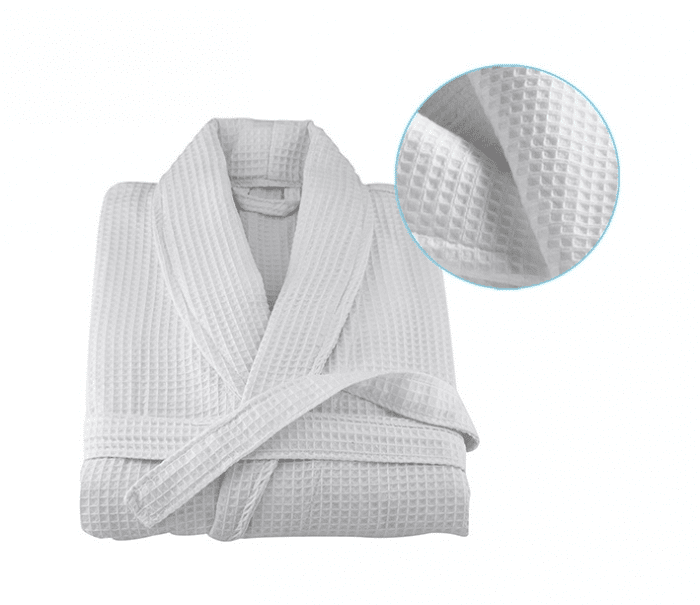
2. Thiết kế hiện đại, sang trọng
Áo choàng tắm khách sạn kiểu dáng hiện đại và thời thượng luôn có sức cuốn hút khó cưỡng. Trong đó, kiểu áo kimono dáng suông tông màu trắng kèm dây thắt lưng to bản được đánh giá là sang trọng, tinh tế và hiện đại. Thiết kế không chỉ giúp cho người mặc nhanh chóng che kín được toàn bộ cơ thể mà còn cho thấy đẳng cấp, sang trọng. Ngoài màu trắng thì khách hàng hoàn toàn có thể chọn tông đơn sắc nhẹ nhàng, hiện đại khác như xám, nâu, xanh dương,… để phù hợp với phong cách khách sạn của mình.
How LegitCasinos Evaluates Online Casino Licensing Standards in Australia
Online gambling regulation in Australia occupies a uniquely complicated space in the global licensing landscape. The Interactive Gambling Act of 2001 prohibits Australian-based operators from offering real-money casino games to residents, yet millions of Australians continue to access offshore platforms every year. This legal ambiguity has created a market where the quality of licensing varies enormously from one operator to the next, and where players often lack the tools to distinguish a rigorously regulated platform from one operating under a nominal or permissive jurisdiction. Understanding how independent review platforms assess licensing standards is therefore not merely an academic exercise — it has direct consequences for the financial safety, data security, and fair-play guarantees available to Australian players. The evaluation methodology used by any credible review platform must account for both the technical requirements of offshore licensing bodies and the practical realities of how those licenses are enforced in relation to Australian customers.
The Regulatory Landscape Facing Australian Players
Australia’s approach to online casino regulation is governed primarily by the Interactive Gambling Act 2001 (IGA), which was significantly amended by the Interactive Gambling Amendment Act 2017. The 2017 amendments tightened restrictions on unlicensed offshore operators and gave the Australian Communications and Media Authority (ACMA) expanded powers to issue blocking notices to internet service providers. Between 2017 and 2023, ACMA blocked access to hundreds of offshore gambling websites, and by mid-2024, the cumulative number of blocked services exceeded 1,000. Despite this, the legislation does not criminalize the act of playing at offshore casinos, which means Australian consumers remain in a grey zone where their participation is tolerated but the platforms they use are technically operating outside the law.
The consequence of this framework is that Australian players are almost entirely dependent on offshore licensing jurisdictions for whatever consumer protections they receive. The most relevant licensing bodies in this context include the Malta Gaming Authority (MGA), the UK Gambling Commission (UKGC), the Gibraltar Regulatory Authority, Curaçao eGaming (now transitioning to the National Ordinance on Offshore Games of Hazard framework following 2023 reforms), and the Kahnawake Gaming Commission in Canada. Each of these bodies has different requirements for financial reserves, dispute resolution, responsible gambling tools, and game fairness auditing. The MGA, for instance, requires licensees to maintain segregated player funds and mandates participation in an approved Alternative Dispute Resolution (ADR) scheme. Curaçao, by contrast, historically operated under a master license system that allowed sublicensees to launch with far less scrutiny — a gap that the 2023 restructuring attempts to address but has not yet fully closed.
For Australian players specifically, the absence of a domestic licensing authority means there is no local ombudsman, no national compensation fund, and no government body actively monitoring whether offshore operators are honoring their terms with Australian customers. This vacuum makes independent evaluation platforms functionally important as a first line of consumer protection research. The challenge for those platforms is developing evaluation criteria that are genuinely comparative across jurisdictions rather than simply confirming that a license exists.
How LegitCasinos Approaches Licensing Verification
LegitCasinos has developed a multi-layered licensing evaluation framework that goes beyond confirming whether an operator holds a valid certificate from a recognized authority. The methodology begins with what the platform terms primary license verification — a process of cross-referencing the license number displayed on the casino’s website against the public registers maintained by the issuing authority. This step alone eliminates a significant number of problematic operators, since some casinos display outdated license numbers, numbers belonging to affiliated but distinct entities, or numbers that have been revoked following compliance failures. The MGA, for example, maintains a publicly searchable register at mga.org.mt where any license can be verified in real time, and similar registers exist for the UKGC and Gibraltar.
Beyond primary verification, the evaluation considers the tier classification of the licensing jurisdiction. In the framework used by LegitCasinos, Tier 1 jurisdictions are those with robust legislative frameworks, independent auditing requirements, mandatory player fund segregation, and enforceable dispute resolution mechanisms. The MGA and UKGC fall into this category. Tier 2 jurisdictions have credible regulatory structures but with some gaps in enforcement capacity or consumer protection scope — the Kahnawake Gaming Commission and the Isle of Man Gambling Supervision Commission are examples. Tier 3 jurisdictions, which historically included Curaçao under the old master license model, have lower barriers to entry and historically weaker enforcement, though the ongoing reforms to the Curaçao framework may eventually shift this classification. Operators holding only a Tier 3 license receive a correspondingly lower licensing score in the platform’s overall casino rating.
The platform also evaluates whether the licensing terms explicitly extend to Australian players. Some licenses, particularly the UKGC license, are geographically restricted and do not authorize operators to accept players from jurisdictions outside the UK. An operator might hold a UKGC license and a separate MGA license, with the MGA license covering international markets including Australia. Failing to identify this distinction would lead to an inflated assessment of consumer protection for Australian users. Detailed methodology documentation for this verification process is available at www.legit-casinos.com, where the platform maintains updated records of which licenses are applicable to Australian residents and how each is assessed within the scoring framework.
A further component of the licensing evaluation involves examining the history of regulatory action taken against each operator. Licensing bodies publish enforcement decisions to varying degrees of transparency. The UKGC has a particularly detailed public record of fines, license suspensions, and formal warnings, with notable cases including the £19.2 million fine issued to Betway in 2020 and the £6.2 million penalty against LeoVegas in 2021. The MGA similarly publishes compliance decisions on its website. LegitCasinos researchers cross-reference these records against each operator under review, and any history of enforcement action — particularly for failures related to anti-money laundering, responsible gambling, or player fund protection — is weighted heavily in the licensing assessment score.
Evaluating Responsible Gambling Compliance as a Licensing Indicator
One of the more nuanced aspects of licensing evaluation involves using responsible gambling tool availability as a proxy for the seriousness with which an operator treats its regulatory obligations. This is particularly relevant for Australian players because Australia has among the highest rates of gambling-related harm per capita in the developed world. A 2022 report from the Australian Institute of Family Studies estimated that approximately 0.5 to 1 percent of Australian adults experience severe gambling disorder, with a further 1.4 to 2.1 percent experiencing moderate harm. Against this background, the presence or absence of meaningful responsible gambling infrastructure is not a peripheral consideration — it reflects whether an operator is genuinely compliant with the spirit of its licensing conditions or merely meeting minimum technical requirements.
The evaluation framework examines several specific responsible gambling features. Deposit limits — both the ability to set them and whether they are applied immediately or subject to a cooling-off delay — are assessed. Under MGA rules, increases to deposit limits must be subject to a 24-hour delay, while decreases must take effect immediately. Operators that reverse this logic, or that make limit-setting difficult to locate within the account interface, are flagged as non-compliant with best practice even if they technically hold a valid license. Self-exclusion functionality is assessed for its integration with third-party schemes such as GamStop in the UK, though no equivalent national self-exclusion register exists for Australian players at offshore sites, which represents a significant structural gap.
Session time tracking, reality check notifications, and the availability of links to support organizations such as Gambling Help Online (the Australian national helpline) are also examined. Some offshore operators serving Australian players include Gambling Help Online contact information in their responsible gambling sections — a detail that suggests genuine attention to the Australian market context rather than generic compliance copy-pasted from European templates. Operators that demonstrate this level of market-specific adaptation tend to score higher in the licensing compliance assessment, on the reasoning that regulatory compliance is more likely to be substantive when operators demonstrate awareness of the specific regulatory and social context of their user base.
Game fairness certification is treated as a component of licensing compliance rather than a separate category. Licensing bodies at the Tier 1 level require operators to use certified Random Number Generator (RNG) technology, with certification typically provided by independent testing laboratories including eCOGRA, iTech Labs, GLI (Gaming Laboratories International), and BMM Testlabs. The presence of active certification from one of these bodies, displayed with a verifiable certificate number, is a positive licensing indicator. Expired certifications, or certifications from bodies not recognized by the issuing licensing authority, are treated as compliance concerns.
Financial Security Standards and Their Role in Licensing Assessment
Perhaps the most consequential aspect of licensing evaluation for individual players involves the financial protections that a license actually guarantees. A casino can hold a valid license and still expose players to substantial financial risk if the licensing jurisdiction does not require meaningful player fund protection. The distinction between operators that segregate player funds from operating capital and those that do not is critical — in the event of insolvency, players at non-segregating operators become unsecured creditors with little practical recourse.
The MGA operates a Player Compensation Fund that provides a safety net of up to €5,000 per player in the event of licensee insolvency, funded through contributions from all MGA licensees. This represents a concrete financial protection that exists independently of whether the individual operator has managed its funds responsibly. The UKGC requires operators to maintain player funds at one of three protection levels — basic, medium, or high — with the highest level requiring funds to be held in a separate trust account or covered by insurance. Operators are required to display their protection level on their website, and the UKGC publishes this information in its public register.
Curaçao, under the historical framework, required no such segregation, which is one of the primary reasons the jurisdiction has been associated with higher-risk operators. The 2023 reforms introduced under the National Ordinance on Offshore Games of Hazard (NOOGH) framework include new requirements for financial integrity, but the transition period has been extended multiple times, and as of early 2025, many operators continue to operate under the old sublicense structure. LegitCasinos tracks these jurisdictional developments and updates its licensing tier classifications accordingly, which means the assessment of a Curaçao-licensed operator may change as the regulatory environment evolves.
Withdrawal processing standards are evaluated as a practical indicator of financial health and licensing compliance. Licensing conditions typically require operators to process withdrawal requests within specified timeframes, and systematic delays or unexplained payment holds are treated as potential compliance failures. The evaluation framework examines player-reported withdrawal experiences across multiple data sources, including formal complaints filed with ADR bodies, forum discussions on established gambling communities, and the platform’s own user reporting system. An operator with a valid MGA license but a documented pattern of delayed withdrawals receives a lower financial security score than the licensing tier alone would suggest, reflecting the gap between formal compliance and operational practice.
Payment method diversity is also assessed in the context of licensing, since the availability of certain payment processors is itself a function of regulatory standing. Processors such as Visa and Mastercard have implemented their own due diligence requirements for gambling operators, and the loss of card processing access is often an early indicator of licensing or financial difficulties. Operators that rely exclusively on cryptocurrency or e-wallet payments while advertising card acceptance may be experiencing processing difficulties that warrant additional scrutiny in the licensing assessment.
The evaluation of online casino licensing standards for Australian players is ultimately an exercise in translating complex, multi-jurisdictional regulatory frameworks into actionable consumer information. The absence of a domestic licensing authority means that Australian players rely on the quality of offshore regulation and the accuracy of independent evaluation platforms to make informed decisions. A rigorous licensing assessment must account for the tier of the licensing jurisdiction, the verification of the specific license held, the history of regulatory action, the substantive quality of responsible gambling and financial protection measures, and the consistency between formal licensing conditions and actual operational practice. Platforms that treat licensing as a binary check — either a license exists or it does not — provide incomplete information that can give players a false sense of security. The methodological depth applied to licensing evaluation is therefore one of the most meaningful differentiators between review platforms that genuinely serve player interests and those that perform only surface-level due diligence.
3. Kích thước đa dạng
Thông thường, áo choàng tắm khách sạn có kích thước phổ biến nhất là size XL để phù hợp với hầu hết đối tượng khách hàng khác nhau, điều chỉnh độ rộng vừa cơ thể bằng dây buộc thắt lưng, khuy áo hoặc dây đeo.
Tuy nhiên, khách sạn cao cấp thường tinh tế hơn khi chuẩn bị nhiều size áo như S, M, L, XL, XXL phù hợp với từng du khách, đem lại cảm giác thoải mái, vừa vặn như mặc trang phục ở nhà của mình. Nếu khách hàng của bạn chủ yếu là người nước ngoài thì nên chuẩn bị chủ yếu áo size lớn, còn nếu phục vụ cho các cặp đôi thì có áo kích thước riêng cho nam và nữ.
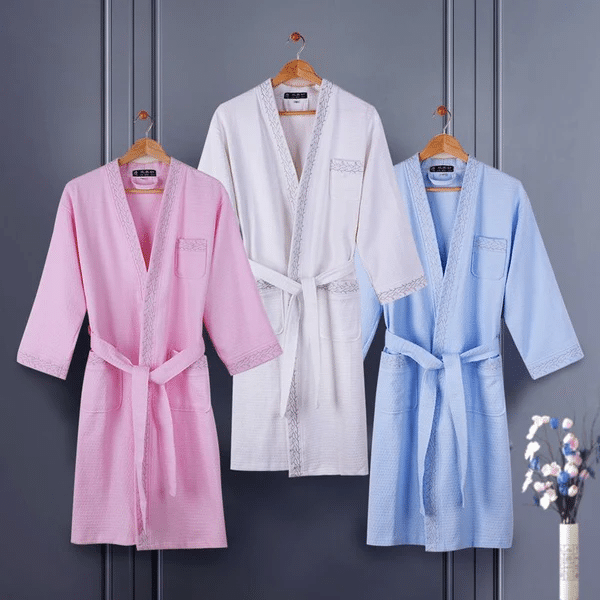
4. Tinh tế, sang trọng
Ngoài sự tiện lợi, thoải mái thì áo choàng tắm khách sạn còn rất đề cao sự tinh tế và sang trọng. Chúng ta thường bắt gặp áo choàng tắm màu trắng sử dụng nhiều nhất. Tông màu này tuy đơn giản nhưng nó nổi bật bởi vẻ đẹp sang trọng, dễ dàng chiều lòng mọi khách hàng. Họ thường cảm thấy mình trở nên đẹp hơn, sang trọng hơn, việc kiểm tra mức độ sạch sẽ của sản phẩm cũng dễ dàng hơn. Đó là cách chăm sóc khách hàng tinh tế, giúp nâng tầm đẳng cấp cho khách sạn của bạn.
5. Độ bền cao và dễ giặt giũ và bảo quản
Áo choàng tắm chất lượng luôn phải đi kèm với độ bền cao và thuận tiện trong việc giặt dũ, bảo quản. Nếu sử dụng đúng cách thì tuổi thọ kéo dài mà vẫn đảm bảo công năng sử dụng tốt, giúp tiết kiệm chi phí đầu tư mua mới. Đó là lý do áo choàng tắm chất liệu cotton tự nhiên được nhiều khách sạn ưa chuộng. Để đảm bảo độ bền, bạn chỉ cần tuân theo hướng dẫn vệ sinh và bảo quản áo choàng theo từng chất liệu.
III. Các loại vật liệu làm áo choàng tắm
Áo choàng tắm khách sạn thường được thiết kế với nhiều chất liệu khác nhau tùy vào mục đích sử dụng và thiết kế. Sau đây là một số loại phổ biến:
1. Sợi bông
Đây là lựa chọn phổ biến nhất. Sợi bông tự nhiên thành phần chủ yếu là xenlulo có khả năng thấm hút nước tốt, thoáng khí, lại vừa mềm mại và an toàn với làn da nên thường được sử dụng để làm áo choàng tắm. Áo choàng tắm sợi bông phù hợp nhất là mặc sau khi tắm.

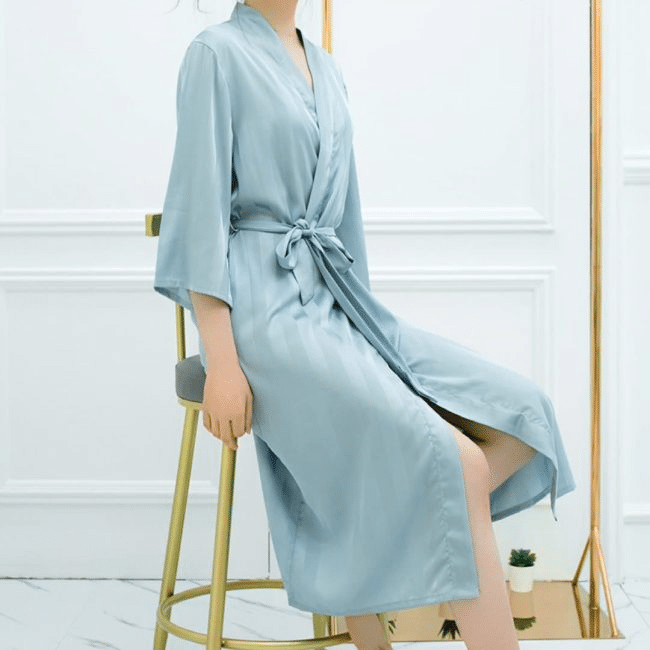
2. Lụa
Áo choàng tắm khách sạn làm từ lụa nổi bật với chất vải đẹp, sang trọng và cho cảm giác thoải mái, nhẹ nhàng khi mặc. Tuy nhiên, vải lụa lại đắt nên không phải khách sạn nào cũng chọn áo choàng tắm làm từ chất liệu này. Áo mỏng và nhẹ nên chủ yếu dùng cho mục đích thời trang hoặc dùng như váy ngủ, không phù hợp với thấm hút nước nên ít sử dụng sau khi tắm.

3. Micro fiber
Sợi microfiber là loại sợi tổng hợp làm từ xenlulo và polyester. Sợi có đặc tính thấm hút nước thấp hơn sợi bông nhưng cao hơn lụa, độ mềm mại không bằng sợi bông. Nhưng về cơ bản, đây vẫn là chất liệu có độ thấm hút và độ mềm phù hợp để làm áo choàng tắm cho khách sạn. Áo chàng tắm microfiber còn có độ bền rất cao, không dễ bị nhàu, dễ dàng để gấp gọn và mang đi du lịch.

4. Sợi nilon
Sợi nilon là sợi tổng hợp, nguyên liệu 100% từ hóa chất nên giá thành rẻ hơn nhiều so với các loại sợi trên. Chúng được đánh giá cao về khả năng làm sạch, thường được dùng sản xuất áo choàng tắm giá rẻ. Nếu khách sạn không có đủ kinh phí nhưng vẫn muốn trang bị áo choàng tắm thì có thể chọn lại áo từ sợi nilon tổng hợp này.

IV. Các loại áo choàng tắm khách sạn
Có 2 loại áo choàng tắm khách sạn thường gặp đó là áo choàng tắm dệt tổ ong và áo choàng tắm sợi bông.
1. Áo choàng tắm dệt tổ ong
Áo choàng tắm được làm từ vải sợi tổ ong và dệt theo hình tổ ong, kết cấu vải khá chắc chắn và sáng bóng nhẹ bắt mắt. Loại áo này có khả năng thấm hút tốt, mềm xốp, trọng lượng nhẹ, ít bị ra lông sau nhiều lần giặt, cách vệ sinh bảo quản cũng rất đơn giản. Bề ngoài trông rất sang trọng, hiện đại. Chất liệu sợi tổ ong thiên nhiên mềm mại và an toàn đối với làn da, mang lại cảm giác thoải mái cho người sử dụng.

2. Áo choàng tắm sợi bông
Áo choàng tắm sợi bông khá dày, mềm mịn, có đặc trưng thấm hút cực tốt. Sản phẩm này sẽ cho ta cảm giác thư giãn thoải mái, tự nhiên và làn da được bảo vệ an toàn tuyệt đối. Tuy nhiên, nếu mua phải áo làm từ liệu bông và kỹ thuật dệt kém thì sẽ dễ bị xù lông, mất phom dáng sau một khoảng thời gian sử dụng, nhất là khi giặt dũ vệ sinh không đúng cách. Chính vì vậy, trong quá trình sử dụng áo choàng tắm khách sạn sợi bông phải giặt ủi và bảo quản kỹ lưỡng.
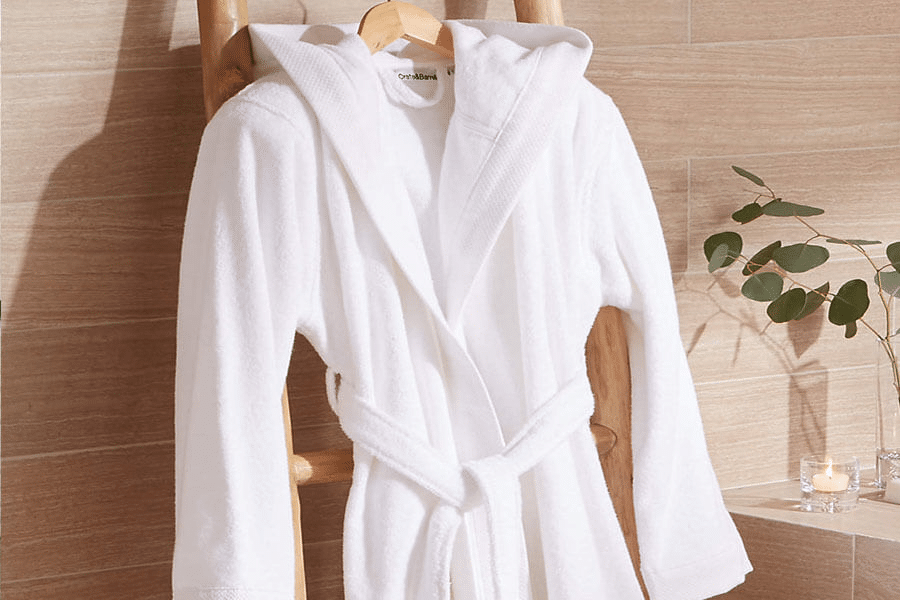
V. Các mẫu áo choàng tắm khách sạn đẹp
Bạn hoàn toàn không cần phải suy nghĩ chọn mẫu áo choàng tắm nào đẹp cho khách sạn của mình với những gợi ý dưới đây của chúng tôi:
- Áo choàng khách sạn 100% cotton cao cấp: Chuyên dùng khách sạn 4-5 sao. Chất liệu mềm mại, thấm hút tốt, thân thiện với làn da cho cảm giác thoải mái, êm ái khi sử dụng.

- Áo choàng tắm dệt tổ ong: Thiết kế hiện đại, vừa kín đáo, vừa mang lại vẻ đẹp quyến rũ, cuốn hút cho người mặc.

- Áo choàng tắm chất liệu 100% cotton waffle: Chất liệu cotton cổ điển, sang trọng và hội tụ những ưu điểm của sản phẩm chất lượng, mềm mịn, thấm hút tốt, đem đến cảm giác thoải mái cho người sử dụng.

- Áo choàng tắm vải velour: Bề mặt vải mịn màng, mềm mại, mang tính thời trang cao.
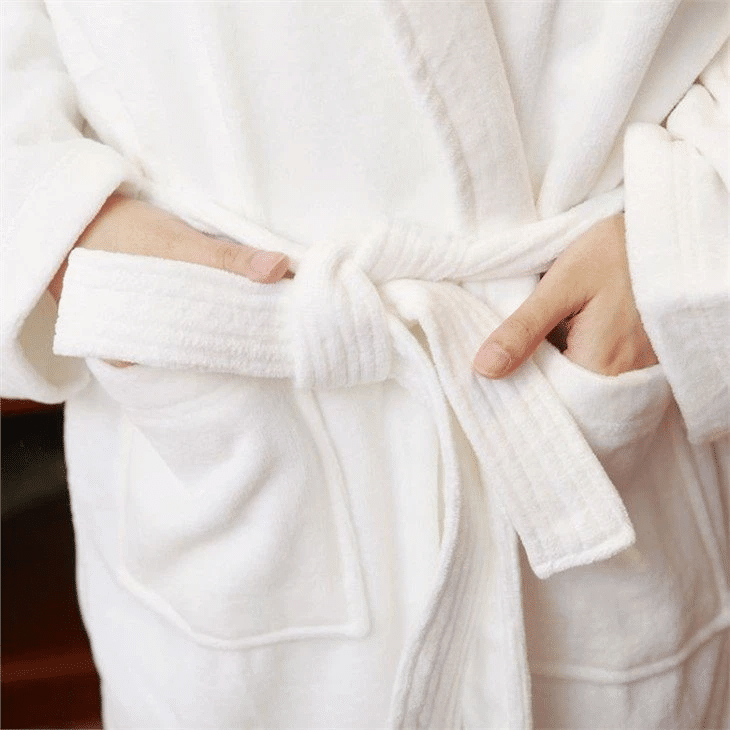
- Áo choàng tắm vải cotton velour: Vừa êm ái lại thấm hút cực tốt, chăm sóc cơ thể tốt nhất.

- Áo choàng tắm lông cừu: Thường sử dụng trong thời tiết lạnh với khả năng giữ ấm tốt nhưng cũng rất mềm mại.
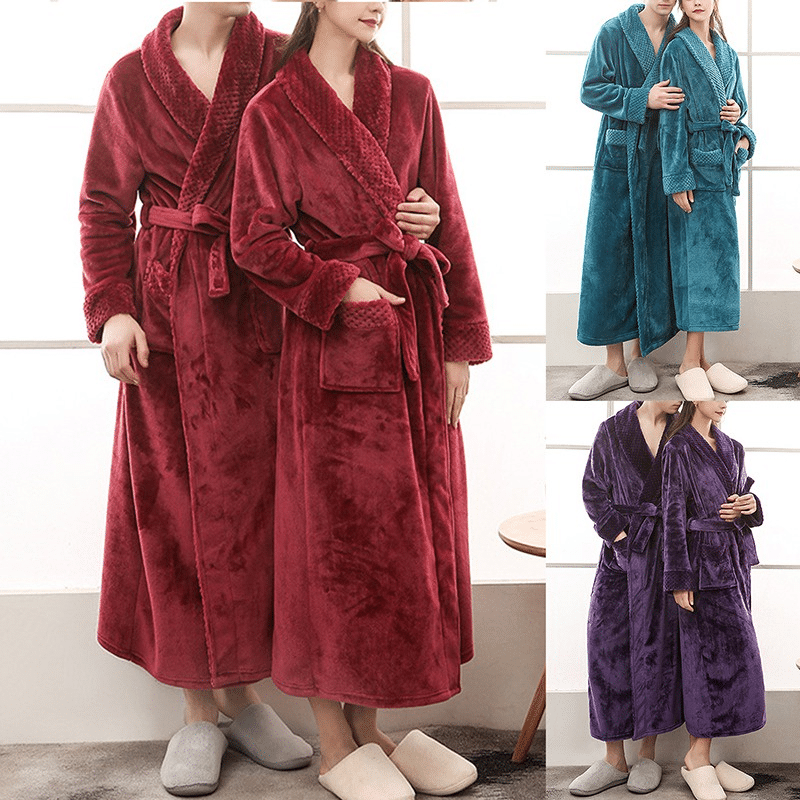
- Áo choàng tắm sợi xô: Khả năng thấm hút tốt, nhanh khô, giữ ấm cơ thể tốt lại rất thời trang.

- Áo choàng: Chất vải mềm mại, thấm hút tốt, không xơ sợi, mang tới vẻ đẹp ấn tượng cho người mang.
VI. Các lưu ý khi chọn áo choàng tắm khách sạn
Khi chọn áo choàng tắm khách sạn thì cần lưu ý những điều sau đây để chọn được mẫu áo như ý và phù hợp với nhu cầu sử dụng:
- Chọn kiểu cổ áo choàng tắm: Kiểu có mũ trùm đầu làm khô tóc, kiểu truyền thống kimono đơn giản, kiểu cổ áo giữ ấm,…
- Chọn kiểu vải làm áo choàng tắm: Dựa theo hình dạng và mẫu vân như kiểu hình vuông, hình hộp, hình bàn cờ, kiểu zigzag, gợn gân sóng, sọc kẻ,…
- Màu sắc: Chọn màu phù hợp với mỗi dòng áo chằng tắm như trắng, be, nâu, xám, xanh,… trong đó màu trắng được ưu tiên nhất.
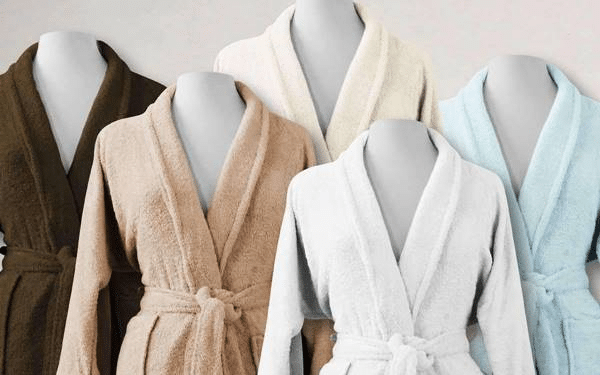
- Chọn chất liệu và lưu ý công năng: Phải đảm bảo khả năng thấm hút, mềm mịn, giúp cơ thể thư giãn một cách tự nhiên.
- Kích thước: Tìm hiểu kỹ để mua đúng kích thước, tránh mua phải áo quá dài hoặc quá ngắn.
- Chọn xuất xứ: Mua sản phẩm có nguồn gốc xuất xứ, thương hiệu uy tín để đảm bảo bảo về chất lượng sản phẩm và giá tốt.
VII. Xưởng may áo choàng tắm khách sạn đẹp và chất lượng
Nếu bạn đang muốn mua những chiếc áo choàng tắm khách sạn đẹp, hãy tìm hiểu và tham khảo ngay thương hiệu Jolie’Fam. Sản phẩm áo choàng của hãng chuyên dùng trong các khách sạn bởi chúng sở hữu những đặc tính, công năng ưu việt:
- Cảm nhận được sự mềm mại, nhẹ nhàng: Chất vải 100% cotton mềm mịn, thấm hút tốt, thêm kiểu dệt tổ ong sang trọng và hiện đại đem đến cho người dùng sự thư giãn thoải mái và hài lòng nhất.
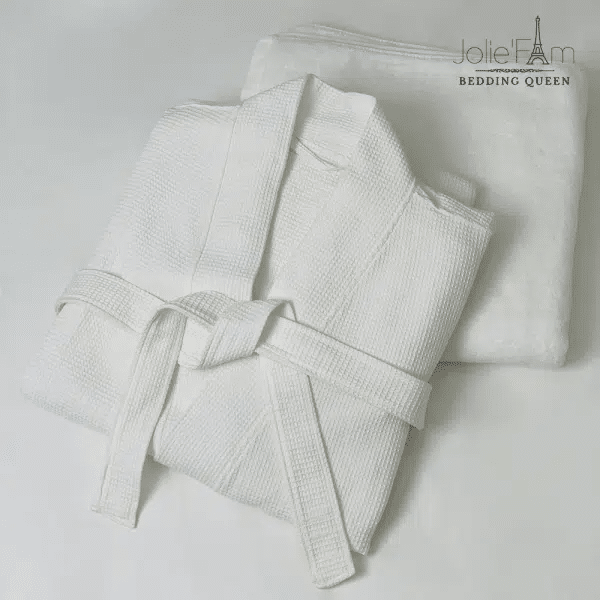
- Sự thân thiện đến từ chất liệu thiên nhiên: Sợi bông hoàn toàn từ thiên nhiên đặc biệt không gây bí bách và còn rất an toàn cho làn da, kể cả da nhạy cảm nhất vẫn cảm thấy thoải mái khi mặc lên người.
- Thiết kế đẹp, sang trọng, tỉ mỉ từng chi tiết: Mặc dù không đa dạng về kiểu dáng, màu sắc, nhưng với kiểu dáng kimono truyền thống với tông màu trắng đơn giản, được gia công với đường may tinh tế, chỉn chu tạo nên sự cuốn hút và sang trọng cho người mặc, thêm túi áo hai bên rất tiện lợi.
- Sản phẩm có độ bền cao: Có thể giặt bằng tay và máy ở chế độ giặt nhẹ, không xù lông, không sổ chỉ, không mất phom dáng nếu bạn biết cách vệ sinh và bảo quản đúng cách theo hướng dẫn của chúng tôi.
Liên hệ ngay Jolie’Fam để được đội ngũ tư vấn viên nhiệt tình giúp bạn chọn được mẫu áo choàng tắm phù hợp nhất. Hãng cung cấp cho Quý khách mức giá tại xưởng cạnh tranh cao, luôn có các chính sách thanh toán tiện lợi, bảo hành đầy đủ và chiết khấu cho đơn hàng lớn. Chúng tôi còn nhận thêu dệt logo hay tên khách sạn lên chiếc áo choàng tắm theo yêu cầu để nâng tầm thương hiệu của bạn.
Bạn cũng có thể tham khảo thêm bảng giá khăn tắm khách sạn để nhận thêm nhiều ưu đãi từ nhà Jolie’Fam
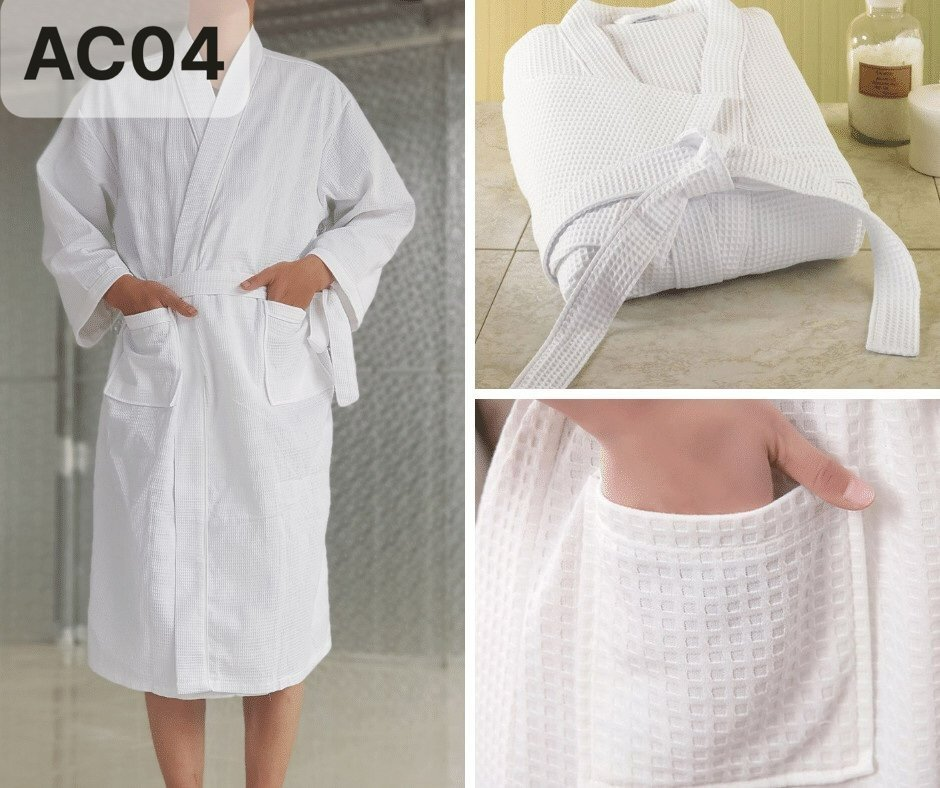
Bài viết trên đã chỉ ra cho bạn những thông tin tổng quan nhất về áo choàng tắm khách sạn. Liên hệ Jolie’Fam để việc lựa chọn áo choàng tắm dễ dàng và nhanh chóng hơn nhé!
Thông tin liên hệ:
- Cửa hàng: Số 21 Ngõ 562 – Lĩnh Nam – Hoàng Mai – Hà Nội
- Xưởng sản xuất: Số 551 Lĩnh Nam – Hoàng Mai – Hà Nội
- Số điện thoại: 0828686866
- Email: Joilefamvietnam@gmail.com
- Zalo: https://zalo.me/0828686866
- Website: https://joliefam.vn/
- Facebook: https://www.facebook.com/joliefamvn
Post Views: 1.181


